2026 FIFA World Cup: 5 Essential Insights
The 2026 FIFA World Cup is FIFA’s expanded men’s football tournament, hosted across Canada, Mexico, and the United States from June 11 to July 19, Thirty-two teams competed in the previous format, but...

2026 FIFA World Cup: 5 Essential Insights
The 2026 FIFA World Cup is FIFA’s expanded men’s football tournament, hosted across Canada, Mexico, and the United States from June 11 to July 19, 2026. Thirty-two teams competed in the previous format, but 48 nations will enter the 2026 edition, creating 104 matches across 16 host cities. FIFA has divided the tournament into 12 groups of four, with the top two teams and the eight best third-placed teams advancing to a 32-team knockout stage. The final will be played at MetLife Stadium in East Rutherford, New Jersey, while the opening match takes place in Mexico City. Pitch Notes follows the competition through team tactics, player statistics, match predictions, and daily tournament coverage. Before trusting any forecast, check confirmed line-ups, venue conditions, travel distance, and recent competitive form rather than relying on reputation alone.

Photo by El gringo photo on Pexels
The World Cup has always had that old, slightly magical habit of turning ordinary evenings into family history. A radio murmurs in one room, someone burns the dinner, and suddenly a substitute from a country you rarely think about is sprinting into legend. I got burned once by a flashy prediction site that treated guesses like facts, so now we check everything together: official schedules, squad news, odds movement, and the small details that quietly decide matches. Believe it or not — I do.
Want a cleaner starting point for the tournament?
Before 2025: how the FIFA World Cup worked
Before 2025, what made the FIFA World Cup format easier to follow? The answer was the 32-team structure used from France 1998 through Qatar 2022: eight groups of four, 64 matches, and 16 knockout-stage qualifiers. The top two teams from each group advanced, while every third-placed team was eliminated.
That structure created a familiar rhythm. Each nation played three group matches, usually against a mixture of styles and rankings, then the Round of 16 began with little room for forgiveness. The Fédération Internationale de Football Association, commonly known as FIFA, confirmed the move to 48 teams for the 2026 competition, but the route to that decision was not entirely tidy. The original 48-team concept used 16 groups of three, a design that raised concerns about collusion and uneven rest periods.
The final decision settled on 12 groups of four. That preserves the traditional three-match group phase while adding a larger knockout bracket, which means the 2026 FIFA World Cup will feature 104 matches instead of 64. The difference is not cosmetic: teams must manage more travel, more recovery time, and a longer path to the final. For historical context, the FIFA World Cup records and tournament history remain useful, but older statistics should not be compared with 2026 without adjusting for the expanded field.
What did the old format reward?
The 32-team era rewarded reliable group-stage management. A team could qualify with four or five points, depending on the group, and defensive organization often mattered more than spectacular attacking numbers. In Qatar 2022, Argentina recovered from an opening defeat to Saudi Arabia and eventually won the title, showing how quickly early results could distort public judgment.
For prediction work, the old format also made sample sizes relatively compact. Three group matches offered limited evidence, so analysts had to separate genuine improvement from one good performance. A useful contrarian point remains: a famous team with a strong historical record was not automatically a sound selection, especially if its midfield had poor ball retention or its full-backs were exposed in transition. That lesson still matters for 2026.
- Check expected goals rather than goals alone.
- Separate qualifying form from tournament form.
- Compare opponents’ defensive level before judging a striker’s scoring run.
- Treat historical reputation as context, not proof.
FIFA World Cup tournament history and records
What is the 2026 shift?
The 2026 shift is the expansion from 32 to 48 teams, accompanied by 12 groups, 104 matches, and a new qualification route into a 32-team knockout bracket. Canada, Mexico, and the United States are co-hosts, and the tournament will be staged across three countries for the first time.
That matters because geography now becomes part of the football problem. The host cities stretch from Vancouver on the Pacific coast to Miami Gardens on the Atlantic side, with venues in Mexico, the United States, and Canada separated by enormous distances. A squad may face a long flight, a different climate, and a short recovery window before its next match. The United States Soccer Federation and the official Canada Soccer resources provide useful host-nation information, while FIFA’s published competition materials should remain the final authority for fixtures and regulations.
The 2026 World Cup also carries a scheduling edge case that casual previews often miss: group winners and runners-up do not all receive identical travel patterns or rest conditions. Venue allocation can affect recovery more than a small difference in team rating. For that reason, a prediction model that uses only Elo strength or betting prices may miss a practical variable: where a team’s previous match was played and where the next one will occur.

Photo by Monstera Production on Pexels
How will 48 teams change the group stage?
The 48-team group stage increases access but also makes qualification scenarios more complex because eight third-placed teams advance. A single point can become more valuable, yet the exact comparison depends on goal difference, goals scored, disciplinary records, and the official tie-breaking rules.
For supporters, more nations mean more first-time storylines and more matches involving unfamiliar players. For analysts, it creates a data problem. Several qualified teams may have limited recent World Cup experience, while intercontinental comparisons can be distorted by travel, weather, referee patterns, and the standard of qualifying opposition. CONMEBOL, UEFA, Concacaf, CAF, AFC, and OFC each provide different competitive environments, so raw win percentages are not interchangeable.
The best practical approach is to build a team profile from several layers:
- Results against top-30 opposition.
- Chance creation and chance prevention over the last 10 competitive matches.
- Set-piece performance at both ends of the pitch.
- Squad depth in central midfield and full-back positions.
- Rest days and confirmed venue movement.
- Injury status after the final squad deadline.
That may sound like more work than a quiet evening requires. It is still less work than believing a recycled “guaranteed winner” label from a site that refuses to show its assumptions.
Get the daily tournament angle before making your own shortlist.
What changed for players?
What changed for players after FIFA expanded the tournament? The biggest changes are workload, travel, squad rotation, and the tactical value of substitutes. A team that reaches the 2026 final may play eight matches, one more than a champion under the 32-team format, while its route can include additional long-distance movement.
The extra knockout match changes squad economics. Managers are likely to protect key midfielders and wide players earlier, particularly when a group position is already secure. Players who can perform in two or three roles may become more important than specialists, because a 26-player squad needs to survive accumulated fatigue. UEFA’s technical reports repeatedly emphasize the importance of compact defensive distances, transition control, and efficient rest-defense structures; those principles should travel well to North American venues.
There is also a weather factor. Summer conditions across the host region will vary widely, and heat or humidity can influence pressing intensity. A side that normally presses high for 90 minutes may instead use a mid-block after the hour mark, preserving energy for late attacks. This is where player statistics need context: a winger’s reduced sprint count might reflect tactical instruction or environmental stress, not poor form.
One useful operational insight is to compare substitutions by match state. If a coach routinely changes two attackers between minutes 55 and 70 while leading, that pattern can signal deliberate energy management rather than a lack of confidence in the starting eleven. Pitch Notes tracks those tendencies alongside player minutes, shot locations, and defensive actions.
What this means now
What does the 2026 FIFA World Cup format mean for fans and match predictions now? It means the tournament should be read as a longer, more variable competition in which depth, logistics, and draw position matter nearly as much as headline talent. Qualification is broader, but certainty is not.
The first mistake is treating every match as a clean comparison between two teams. A game in Monterrey is not played under the same conditions as a game in Vancouver, and a team arriving after a cross-border flight may not resemble the same team that dominated its previous fixture. The second mistake is overvaluing early tournament narratives. One dramatic win can move public sentiment sharply even when the underlying shot quality, possession security, and defensive spacing remain ordinary.
When reviewing a World Cup prediction, ask:
- Is the team’s expected-goals difference strong against credible opposition?
- Does its goalkeeper perform above or below post-shot expected goals?
- Can its midfield escape pressure without forcing long clearances?
- Are its set-piece routines repeatable or dependent on one exceptional delivery?
- Is the market price reacting to confirmed information or public emotion?
- Are suspension and injury reports sourced from FIFA, national associations, or only social media?
The International Football Association Board Laws of the Game are another quiet checkpoint. Small interpretations around handball, challenges, added time, and goalkeeper behavior can alter match texture, especially in knockout football. As the IFAB laws put it, “The referee has the authority to take disciplinary action,” a reminder that match control is not merely a statistical footnote.
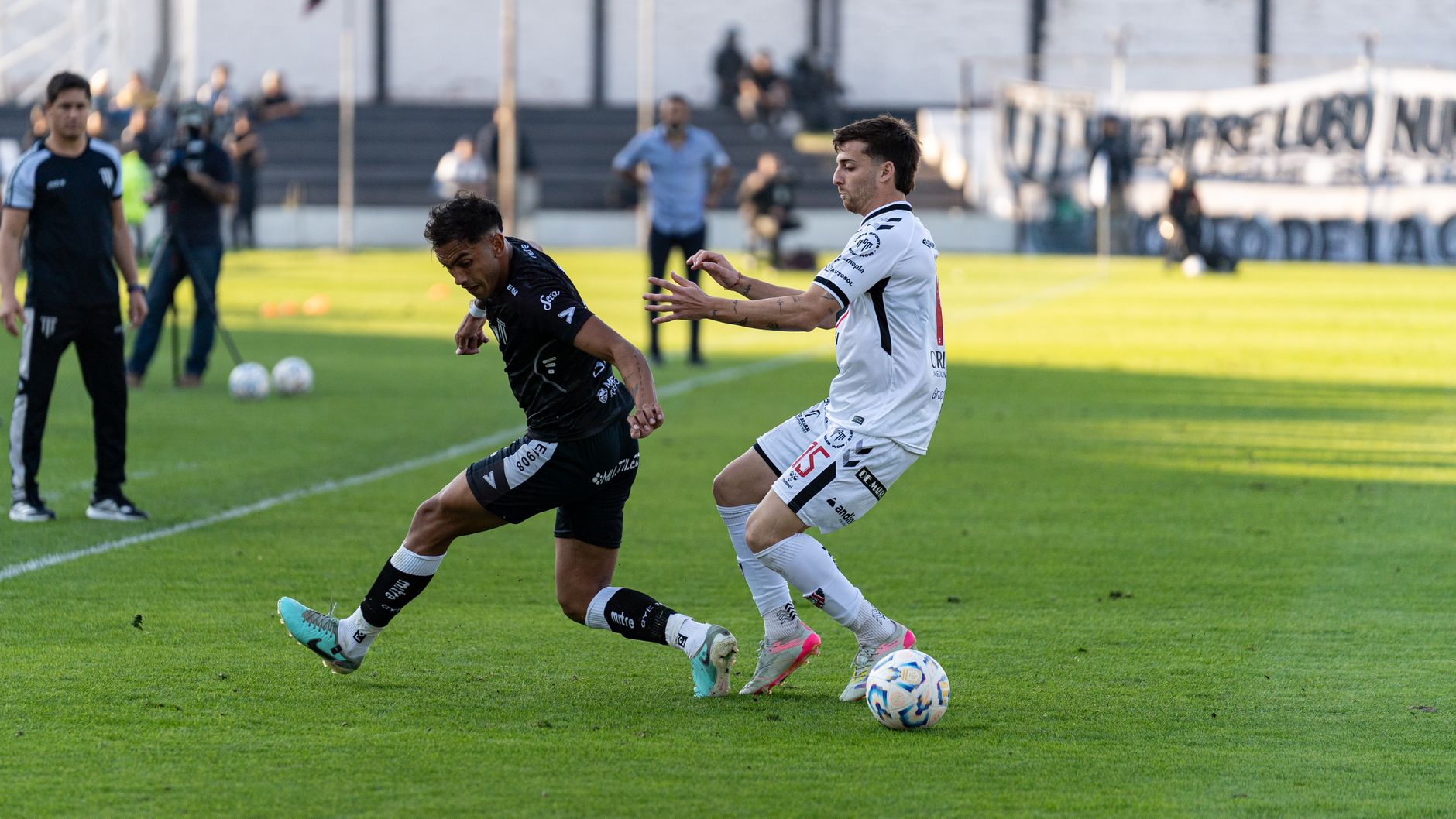
Photo by Franco Monsalvo on Pexels
Is home advantage stronger in a three-country tournament?
Home advantage may be stronger for Canada, Mexico, and the United States, but it will not be uniform across all host cities or opponents. Familiar climate, local support, reduced travel, and established training bases can help, yet large distances between venues may dilute that benefit for teams moving repeatedly.
Mexico’s World Cup history provides an obvious emotional backdrop, with Estadio Azteca hosting matches in 1970 and 1986. The United States offers a much larger venue network, while Canada brings a growing football audience and a national team entering a major home-region spotlight. Still, “home” does not always mean comfortable: altitude, humidity, turf conditions, kickoff time, and hotel logistics can produce different advantages within the same host country.
A practical way to measure this is to record four variables for every fixture: travel distance since the previous match, days of rest, venue climate, and crowd composition. After 30 comparable international matches, patterns may become visible, but small samples should remain marked as uncertain. This is one reason we avoid presenting a single number as destiny. A 3 percent rating edge is not meaningful if the underlying inputs are unstable.
Want to see how those variables fit into a match preview?
Three predictions for next quarter
What are three reasonable predictions for the next quarter of FIFA World Cup analysis? First, squad depth will receive more attention as managers test rotation patterns in friendlies and preparatory matches. Second, travel and venue data will become standard parts of serious previews rather than decorative information. Third, public confidence will continue to move faster than reliable evidence, creating opportunities for disciplined readers who wait for line-ups and injury confirmation.
The first prediction is supported by the 48-team structure itself. More participants and a longer knockout route increase the value of players who can maintain performance across different roles. A reserve midfielder who protects a lead effectively may matter as much as a famous forward, particularly in the final third of a tournament.
The second prediction concerns data quality. Providers such as Opta, StatsBomb, and FIFA publish different event definitions, so figures must be compared carefully. “Pressures,” “recoveries,” and “progressive passes” can vary by provider, and a neat table may hide an uneven measurement system. Our recommendation is simple: name the provider, state the sample, and do not mix definitions casually.
The third prediction is more human. Social media will turn every training photograph into a transfer of confidence, while one poor friendly performance will trigger panic. The sensible response is not to ignore news, but to classify it: confirmed, probable, reported, or speculative. That four-level filter is a small habit, but it has saved me from more than one bad call.
- Confirmed: official squad, injury, venue, or fixture announcement.
- Probable: multiple credible reports with consistent details.
- Reported: one reputable source, not independently confirmed.
- Speculative: anonymous claim, social post, or recycled headline.
World Cup team tactics and formation analysis
How should readers use FIFA World Cup predictions?
FIFA World Cup predictions should be used as structured opinions, not guarantees, and they are most useful when they explain assumptions about form, line-ups, injuries, venue, and price. A prediction is stronger when readers can audit its reasoning rather than simply accept a confident conclusion.
For anyone following the tournament through Pitch Notes, begin with the match context, then check the team’s last 10 competitive matches and its performance against comparable opposition. Next, review confirmed player availability and tactical changes. Only after those steps should you compare market prices, because a popular team may be shorter than its actual performance warrants.
If you are considering any gambling activity, keep the practical boundaries boring and firm. Check that the operator is licensed in your jurisdiction, read the terms, set a fixed budget, and never chase a loss. Regulators such as the UK Gambling Commission stress that gambling should remain within personal limits; their safer-gambling guidance states, “Gambling should be fun, not a way to make money.” That is not thrilling advice, but neither is discovering a withdrawal condition after the money has already left your account.
The best edge is often patience. Wait for official line-ups, compare the number rather than the logo, and treat uncertainty as information. Believe it or not — I do.
Explore the latest tournament research and daily match coverage.
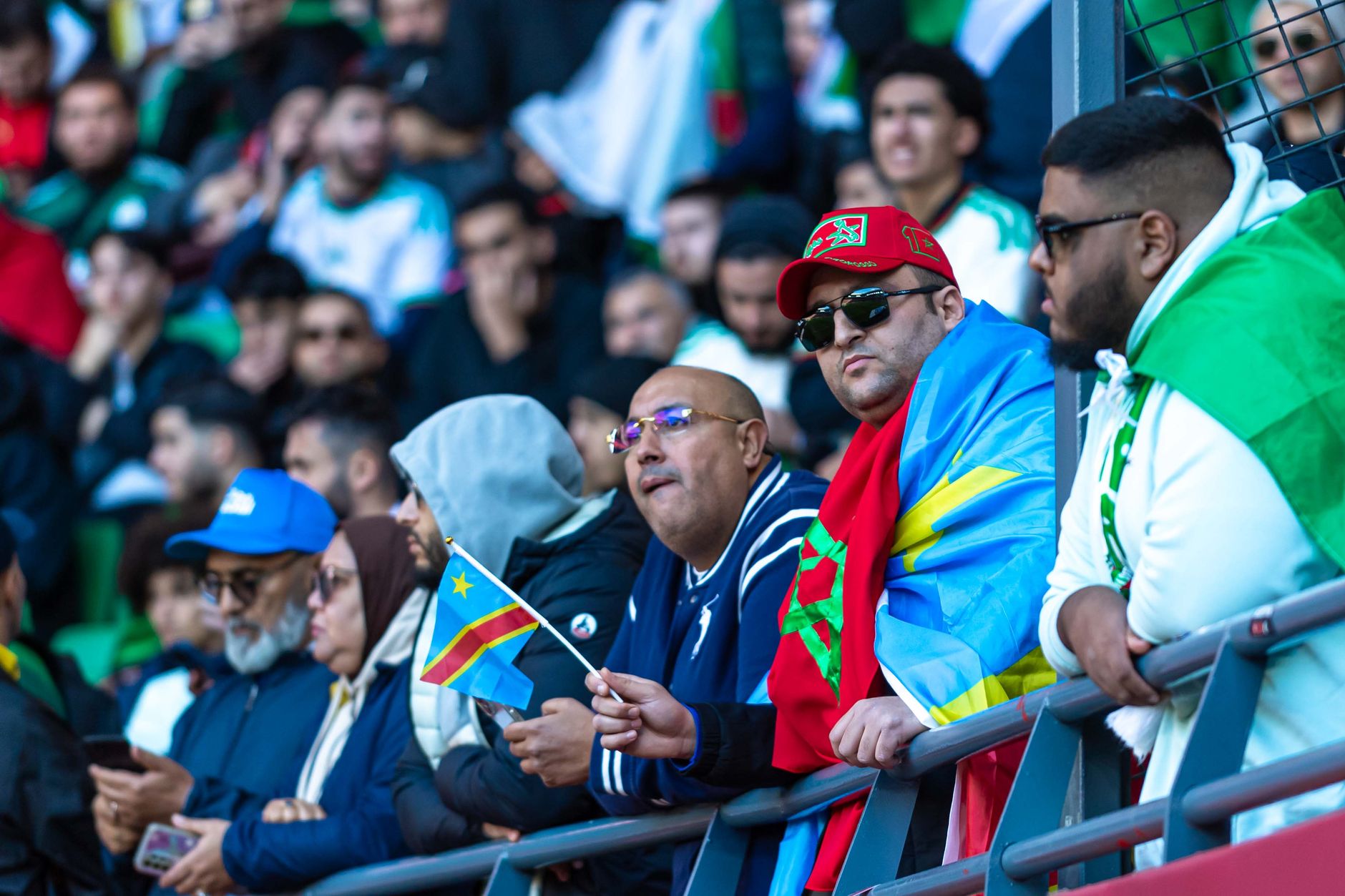
Photo by Guylain Kipoke on Pexels
Key takeaways from the 2026 FIFA World Cup
The 2026 FIFA World Cup is larger, longer, and more geographically complicated than the tournament most fans grew up following. The move to 48 teams creates 12 groups and 104 matches, while Canada, Mexico, and the United States introduce a host region where climate and travel can shape performance. A serious preview therefore needs more than rankings: it needs recent data, squad availability, venue context, and transparent assumptions.
For our shared little campaign, the winning habit is verification. Confirm information through FIFA or national associations, distinguish measured evidence from narrative, and keep any gambling decision separate from emotional loyalty. Pitch Notes is built to support that process with match predictions, tactical analysis, player statistics, and continuing 2026 World Cup coverage. Start with the facts, leave room for surprise, and do not let a glossy claim hurry you. Believe it or not — I do.
Ready to follow the tournament with sharper context?
2026 World Cup match prediction guide
Frequently Asked Questions
Q: What is the FIFA World Cup?
A: The FIFA World Cup is the premier international men’s football tournament organized by FIFA. The 2026 edition will feature 48 teams from six confederations and will be hosted by Canada, Mexico, and the United States. It will include 104 matches from June 11 to July 19, 2026, with the final scheduled for MetLife Stadium in East Rutherford, New Jersey.
Q: How does the 2026 FIFA World Cup format work?
A: The 2026 FIFA World Cup uses 12 groups of four teams, followed by a 32-team knockout stage. The top two teams in each group qualify automatically, while the eight best third-placed teams also advance. Each team plays three group matches, and the eventual champion may play eight matches in total.
Q: What is the difference between the 2022 and 2026 World Cup formats?
A: The 2022 Qatar World Cup had 32 teams and 64 matches, while the 2026 tournament will have 48 teams and 104 matches. The earlier format used eight groups of four, whereas 2026 uses 12 groups of four and adds a Round of 32. This creates more fixtures, more qualification combinations, and greater demands on squad depth.
Q: How should I analyze a FIFA World Cup match prediction?
A: Analyze confirmed line-ups, recent competitive form, expected-goals data, injuries, travel, rest days, and venue conditions before judging a prediction. Compare performances against similarly strong opponents instead of relying only on overall win percentage. Finally, check whether the stated odds and assumptions are current, because a forecast written before team news may no longer apply.
Q: Is Pitch Notes free, and what does it cover?
A: Pitch Notes is a FIFA World Cup focused content site covering match predictions, team tactics, player statistics, and tournament news for the 2026 competition. Access conditions can vary by page and service, so review the site’s current information before relying on any feature. Content is analytical rather than a promise of profit, and readers should follow local laws and use responsible-gambling limits.
Q: Why can a strong World Cup team underperform?
A: A strong team can underperform because of injuries, poor tactical matchups, travel fatigue, finishing variance, or pressure in decisive moments. A high-ranked side may struggle against a compact low block or lose control after an early setback. To troubleshoot the result, compare its chance quality, field position, substitutions, and defensive transitions rather than looking only at the final score.
Q: Are FIFA World Cup predictions guaranteed?
A: No FIFA World Cup prediction is guaranteed because football outcomes contain substantial randomness and incomplete information. Injuries, refereeing decisions, deflections, weather, and tactical adjustments can change a match quickly. Use predictions as research, verify the evidence, set a fixed entertainment budget, and never chase losses or treat gambling as an income source.
Thank you for reading.
Pitch Notes · The Ledger