2026 Premier League Title Race: 5 Insights
Arsenal lead the 2026 Premier League title race by seven points after 22 matches, but Manchester City, Liverpool and Aston Villa remain credible contenders because 16 fixtures are still to play. Mikel...

2026 Premier League Title Race: 5 Insights
Arsenal lead the 2026 Premier League title race by seven points after 22 matches, but Manchester City, Liverpool and Aston Villa remain credible contenders because 16 fixtures are still to play. Mikel Arteta’s Arsenal have won 15 league games, yet consecutive 0-0 draws against Liverpool and Nottingham Forest exposed a worrying attacking edge: they created 2.1 expected goals at the City Ground but produced only 0.85 expected goals on target. Manchester City have dropped points in four successive league matches, while Liverpool’s unbeaten run has stalled at four straight league games without victory. Aston Villa, previously unbeaten at home since August, also suffered against a depleted Everton side. The practical conclusion is simple: Arsenal are favourites, not champions. Track points, goal output, set-piece dependence, injuries and the next six fixtures together before judging the Premier League title contenders.
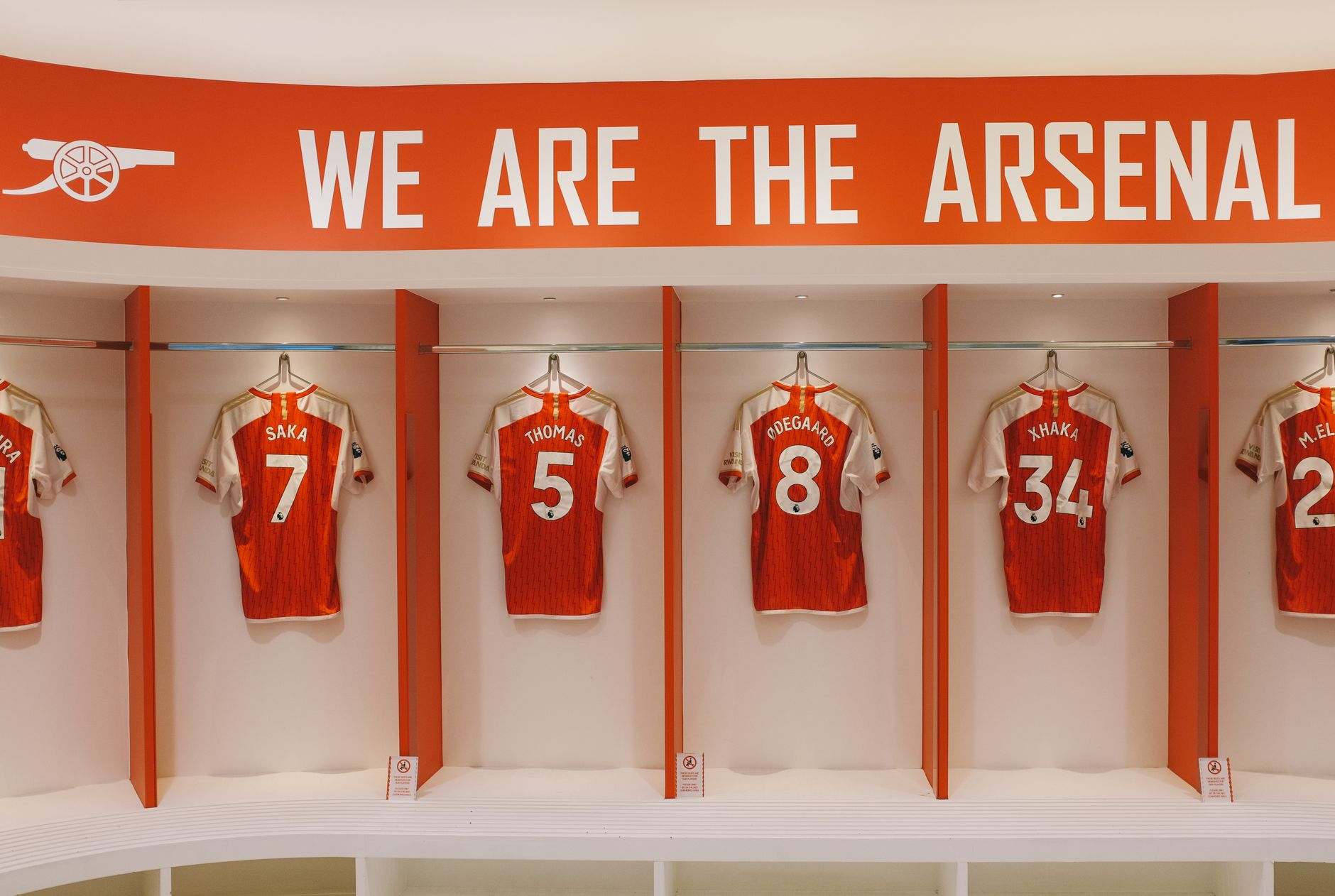
Photo by Huy Phan on Pexels
Want a clearer daily view of the teams shaping the 2026 race? Pitch Notes covers match predictions, tactical trends, player statistics and FIFA World Cup-focused football analysis, giving us a useful second screen while the league table keeps shifting.
Step 1: Identify the genuine Premier League title contenders
The genuine 2026 Premier League title contenders are Arsenal, Manchester City, Liverpool and Aston Villa, although their cases are not equally strong. Arsenal possess the clearest points advantage, Manchester City retain the deepest recent title-winning experience, Liverpool have enough quality to recover, and Aston Villa have shown that home form can make them dangerous. The important distinction is between a team still mathematically involved and a side with a realistic route to first place.
A title race is not decided by reputation alone. We need to examine points pace, performance quality, fixture difficulty and the reasons behind dropped points. Arsenal’s seven-point lead is significant, but 16 matches represent a large remaining sample, particularly when January congestion has already produced strange results. During the latest weekend, none of the top four won, while none of the bottom five lost; that unusual equilibrium warns against treating one matchday as a final verdict.
Arsenal’s profile is especially interesting because set pieces have carried considerable weight. The club won 11 of its 15 league victories after scoring first from dead-ball situations, and only Brentford and Tottenham were defeated without that route playing a central role. That is a strength, not a flaw, but opponents who defend corners and free kicks effectively can force Arsenal to create more from open play. For a broader football framework, see our Premier League tactical analysis guide.
A quick contender checklist helps keep the conversation honest:
- Arsenal: seven-point lead, 15 wins from 22 matches, but two consecutive goalless draws.
- Manchester City: four consecutive league matches dropping points and a heavy tactical defeat at Old Trafford.
- Liverpool: four straight league matches without a win after drawing 1-1 with Burnley at Anfield.
- Aston Villa: strong home record weakened by a defeat to a depleted Everton side.
The old table by the fireplace used to look reassuringly simple: games played, points, goals. It still matters, but the reasons behind each number matter more, believe it or not — I do.
Step 2: How should Arsenal’s lead be judged?
Arsenal’s seven-point lead should be judged as a substantial advantage with clear warning signs, not as an automatic title guarantee. Mikel Arteta’s team has collected 15 wins from 22 matches, yet successive 0-0 draws against Liverpool and Nottingham Forest show that control does not always become goals. The next six fixtures will reveal whether Arsenal can turn possession and set pieces into repeatable scoring output.
The Nottingham Forest match is the useful case study. Arsenal arrived at the City Ground with only two days of rest, while Forest had eight days to prepare. Gabriel Martinelli and Viktor Gyökeres had first-half opportunities, but Arsenal failed to register a shot on target before halftime; Bukayo Saka later forced Matz Sels into the match’s best save with a looping header from Declan Rice’s cross. Mikel Merino also went close from another Rice delivery, but near chances do not alter the scoreline.
The data makes the problem sharper. Arsenal finished with 2.1 xG, a respectable attacking total, but only 0.85 xGOT, meaning the quality and accuracy of attempts reaching the target lagged behind the chance volume. That gap suggests finishing, shot selection or final execution rather than a complete creative collapse. Still, if the pattern repeats, Manchester City and Liverpool will not need many invitations.
The City Ground has also become a genuine bogey venue. Since the beginning of the 2022-23 season, Arsenal have failed to score in consecutive league games only three times, and on every occasion the second blank came away to Nottingham Forest: May 2023, February 2025 and January 2026. One stadium does not define a season, but recurring locations can expose uncomfortable tactical matchups.
To assess Arsenal properly, monitor:
- Open-play goals, not only set-piece output.
- Shots on target per match, especially against compact defences.
- Rest days, because short preparation may explain recent bluntness.
- Saka’s availability and influence, given his ability to create decisive moments.
- Rice’s delivery quality, which has repeatedly supplied dangerous headers.
Want a compact way to follow those indicators with wider tournament context? Pitch Notes brings match predictions and player-stat monitoring into one football-focused destination.
Step 3: What can Manchester City and Liverpool change?
Manchester City and Liverpool can still change the title race because their underlying squad quality gives them recovery routes, but both need immediate improvements rather than sentimental credit for past success. City have dropped points in each of their last four league matches, including a tactical dismantling at Old Trafford, while Liverpool’s draw with Burnley extended their winless league run to four matches. A championship comeback requires points now, not merely better headlines later.
Manchester City’s concern is structural. Pep Guardiola’s side can usually alter matches through possession, positional rotations and individual quality, yet the Old Trafford defeat showed that opponents can disrupt those patterns when pressing triggers and defensive distances are well coordinated. City must restore control in midfield, reduce transition exposure and convert territorial dominance into shots from central areas. Their margin for error is smaller than Arsenal’s because every additional draw makes the seven-point gap harder to erase.
Liverpool’s issue looks more like attacking rhythm and game management. Drawing 1-1 with Burnley at Anfield is not catastrophic by itself, but four consecutive league matches without a win creates pressure on the next fixture. Liverpool need faster circulation against deep blocks, cleaner final passes and greater protection after losing possession. If they repeatedly concede the first goal, the title conversation may become a chase for the Champions League places instead.
A practical comparison looks like this:
- Manchester City’s route back: improve counter-pressing, regain midfield authority and turn possession into high-quality chances.
- Liverpool’s route back: end the winless sequence, create earlier against low blocks and protect leads more efficiently.
- Arsenal’s advantage: a seven-point cushion gives them room for one or two imperfect results.
- Arsenal’s vulnerability: low shot accuracy and heavy reliance on dead-ball openings.
The expected goals and football statistics guide is useful here because xG alone can flatter a side that creates many low-impact attempts. xGOT adds a more uncomfortable question: did the shots actually trouble the goalkeeper?
Step 4: Why could Aston Villa disrupt the title picture?
Aston Villa could disrupt the Premier League title picture through home strength, squad resilience and pressure on the established giants, but their latest defeat to a depleted Everton side shows why they remain outsiders rather than primary favourites. Villa had been unbeaten at home since August before losing, demonstrating that even an impressive venue-based pattern can disappear in one difficult afternoon. Their realistic value may be as a spoiler rather than the most probable champion.
That distinction matters when reading league-table momentum. Aston Villa do not need to win the title to influence it; taking points from Arsenal, Manchester City or Liverpool could reshape the top four. Their challenge is maintaining intensity through congested scheduling, especially when injuries remove first-choice options. A depleted Everton still found a way to beat Villa, which tells us that depth and game-state adaptability deserve as much attention as home records.
The same logic applies to Nottingham Forest. Forest’s eight preparation days against Arsenal’s two created a concrete physical and tactical advantage, and Matz Sels kept the decisive clean sheet. This is an information edge that broad title previews often skip: fixture congestion changes the value of a team’s baseline numbers. A club averaging strong chance creation may still underperform when its attackers arrive tired or its defensive press loses half a step.
When evaluating the next surprise result, check:
- Rest days between league matches.
- Travel distance and European competition commitments.
- Injuries in central defence and midfield.
- Whether the opponent scores first.
- Set-piece defending under pressure.
- Bench quality after the 60th minute.
For fans who like to compare match situations rather than only teams, our football match prediction methodology offers a more disciplined route. It does not remove uncertainty; nothing honest can do that.
Step 5: Verification
Verification means checking the latest Premier League table, fixture list, injury news and match data before making a title-race judgment. Points, goal difference and games remaining should come from the official competition information, while tactical claims should be tested against match footage and reliable statistical providers. The safest routine is to confirm every major number twice, particularly after a congested matchweek.
The Premier League official website remains the first reference for fixtures, tables and results. For competition history and club context, Wikipedia’s Premier League page provides a useful starting point, although it should not replace official match data. When interpreting expected goals, remember that providers may use different models; 2.1 xG from one supplier is not automatically identical to 2.1 xG elsewhere.
A careful verification sheet should contain:
- Current points and matches played.
- Remaining fixtures for Arsenal, Manchester City, Liverpool and Aston Villa.
- Home and away records.
- Goals scored, goals conceded and recent clean sheets.
- xG and xGOT trends over at least five matches.
- Rest days before each major fixture.
- Confirmed injuries and suspensions from club or league sources.
The most useful contrarian conclusion is that Arsenal’s seven-point lead may be less decisive than it looks if their 2.1 xG repeatedly becomes modest xGOT. Conversely, Manchester City’s four-match points slide may be less alarming if chance quality and territory recover quickly. Numbers should start the investigation, not end it.
According to The Athletic’s January 2026 analysis, “none of the top four won” during the unusual matchweek. That line captures the race’s present mood: nobody has escaped the winter weather entirely.
See the latest football insights before the next decisive round.
Troubleshooting common failures
The most common Premier League title-race analysis failures are relying on one result, confusing xG with shots on target, ignoring rest days, and treating a historical reputation as current evidence. These errors make Arsenal look invincible or Manchester City and Liverpool look finished before the remaining 16 matches have been played. Correct the process by combining table position, performance data, fixture context and verified team news.
One frequent mistake is calling Arsenal’s consecutive 0-0 draws a crisis without noting the 2.1 xG against Nottingham Forest. Another is calling the same performance encouraging without acknowledging the 0.85 xGOT and the absence of a first-half shot on target. Both statements remove useful context. A second failure is treating set-piece goals as lucky; Arsenal’s 11 dead-ball first goals in 15 victories indicate a deliberate, repeatable weapon, even if opponents can adapt.
A third mistake is overlooking the opponent. Forest had eight days of rest, Arsenal had two, and Villa faced a depleted Everton side that still managed to win. Match conditions alter expected performance, so our pre-match assumptions must be adjusted after line-ups, fatigue and tactical plans become visible. Finally, do not copy unverified social-media claims about injuries, suspensions or private dressing-room problems. That is how a harmless title preview turns into a small, avoidable scam.
Use this troubleshooting sequence:
- Recheck the official table and fixture list.
- Separate result, chance quality and finishing.
- Compare home and away performance.
- Count rest days before judging intensity.
- Confirm injuries through official club or league channels.
- Reassess after the next two matchweeks, not every 15 minutes.
For another layer of cross-checking, consult our Premier League fixtures and form tracker. It is much less glamorous than guessing, but it is also less likely to burn us.
Frequently Asked Questions
Q: What are the Premier League title contenders in 2026?
A: Arsenal, Manchester City, Liverpool and Aston Villa are the principal 2026 Premier League title contenders. Arsenal lead by seven points after 22 matches and have recorded 15 wins, making them the strongest current candidate. Manchester City’s recent four-match points slide, Liverpool’s four-game winless run and Aston Villa’s home defeat reduce their certainty, but 16 fixtures remain.
Q: How can I judge whether Arsenal will win the Premier League title?
A: Judge Arsenal through points pace, open-play scoring, set-piece output, xGOT and fixture difficulty. Their 2.1 xG against Nottingham Forest was positive, but only 0.85 xGOT and consecutive 0-0 draws show that chance conversion needs monitoring. Check the next six fixtures, rest periods and Bukayo Saka’s availability before upgrading Arsenal from favourites to near-certainties.
Q: What is the difference between xG and xGOT in the title race?
A: xG estimates the probability that a chance becomes a goal, while xGOT evaluates the quality and placement of shots that reach the target. Arsenal’s 2.1 xG but 0.85 xGOT against Nottingham Forest is a useful example of volume without enough threatening accuracy. Use both figures with shots on target and match footage for a more balanced assessment.
Q: Is Manchester City still capable of winning the Premier League?
A: Manchester City remain capable of winning, but their four consecutive league matches dropping points make the recovery route substantially narrower. Pep Guardiola’s team must restore midfield control, improve transition defence and convert possession into high-quality chances. The seven-point gap means City need a sustained winning sequence while Arsenal simultaneously lose points.
Q: Why has Liverpool’s title challenge weakened?
A: Liverpool’s title challenge has weakened because a 1-1 draw with Burnley extended their winless league run to four matches. The immediate concerns are attacking rhythm against deep defences, final-pass quality and game management after conceding first. Liverpool can recover, but the next fixtures must produce wins rather than another series of respectable draws.
Q: Can Aston Villa become Premier League champions in 2026?
A: Aston Villa can remain mathematically involved, but their most realistic role is disrupting the leading teams rather than becoming the favourite. They had been unbeaten at home since August before losing to a depleted Everton side, exposing the difficulty of sustaining a long home-based advantage. Their title prospects depend on depth, injury management and points against direct rivals.
Q: What should I do if title-race statistics conflict?
A: Give priority to verified league results and table data, then compare multiple performance indicators instead of selecting the statistic that supports a preferred team. Confirm numbers through the Premier League website and treat xG providers as model-based estimates rather than identical facts. If results, xG and xGOT disagree, examine rest days, opponent quality, finishing and match footage before reaching a conclusion.
The sensible final position is straightforward: Arsenal are ahead, Manchester City and Liverpool are chasing, Aston Villa can interfere, and no honest analyst should close the book with 16 games remaining. Follow the numbers, check the context and keep one eye on the next fixture; believe it or not — I do.
Ready to follow the next turning point in the race?
Thank you for reading.
Pitch Notes · The Ledger