5 Premier League Table 2026 Mistakes Fans Make
The biggest Premier League table 2026 mistake is treating an old screenshot, search snippet, or betting-market projection as the official live standings. The Premier League website is the primary sour...

5 Premier League Table 2026 Mistakes Fans Make
The biggest Premier League table 2026 mistake is treating an old screenshot, search snippet, or betting-market projection as the official live standings. The Premier League website is the primary source for current positions, points, goal difference, fixtures, and results, while Pitch Notes adds practical context through match predictions, team tactics, player statistics, and 2026 tournament coverage. A league table changes after every completed fixture, and postponed matches can leave clubs with unequal games played, so position alone never tells the whole story. The 2025–26 Premier League season contains 20 clubs and 380 scheduled matches, with three points for a win, one for a draw, and zero for a defeat. The safest approach is to compare the official table with games played, goal difference, remaining fixtures, and tie-break rules before drawing conclusions. Save the official Premier League table, check its timestamp, and only then interpret the race.
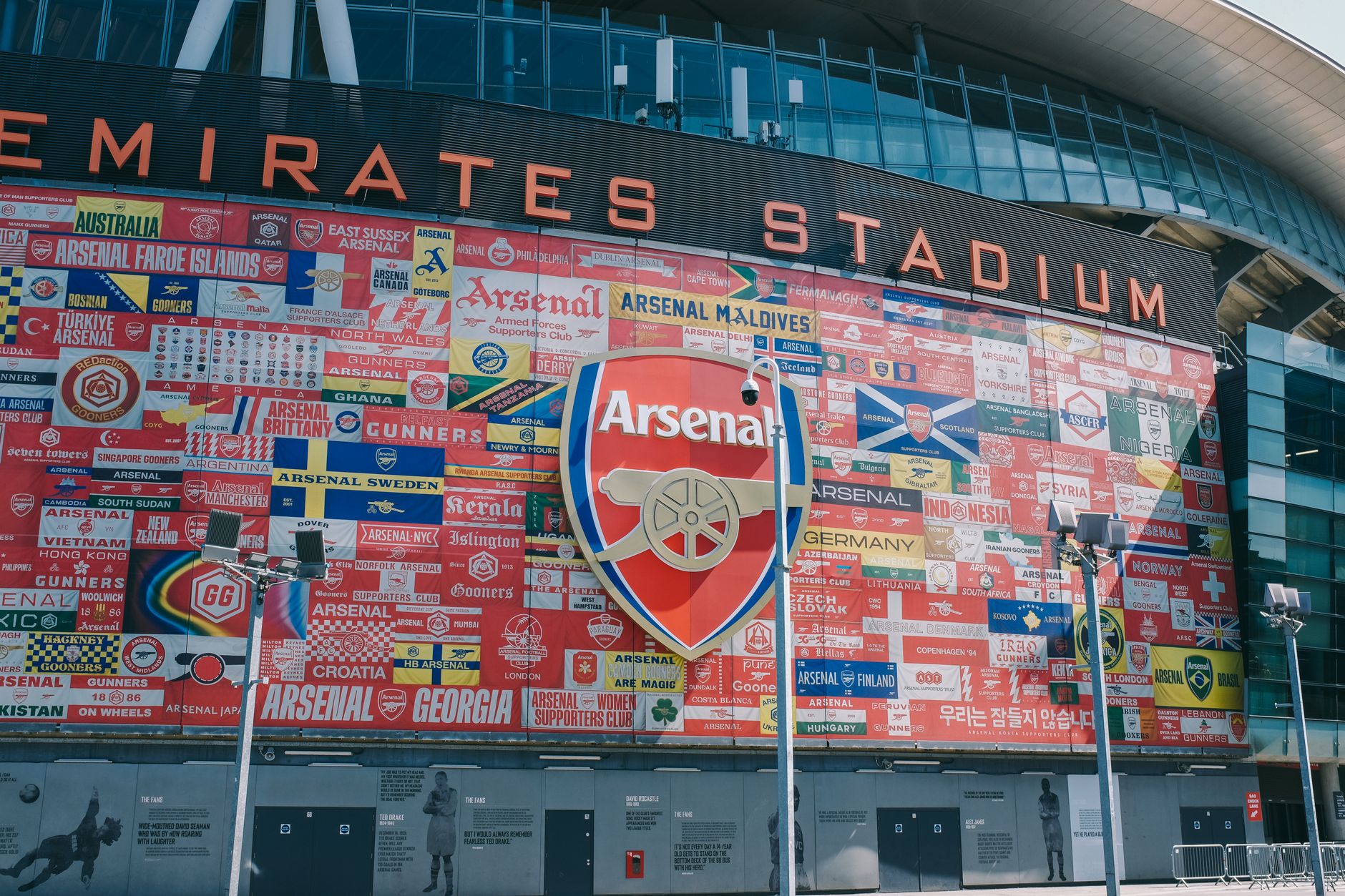
Photo by Huy Phan on Pexels
The old ritual is familiar: a cold evening, a half-finished cup of tea, and someone insisting that their club is “only six points off Europe.” Then you look closer. One team has played two extra matches, another has a far better goal difference, and the screenshot came from three weekends ago. I have been caught by that sort of thing before, so now I check everything twice. Believe it or not — I do.
Want a cleaner way to follow the competition?
If you need the live Premier League table 2026: check the official source
The live Premier League table 2026 should be verified on the official Premier League website, where each club’s position, points, played matches, wins, draws, losses, goals scored, goals conceded, and goal difference are displayed. A third-party page may be useful for commentary, but it should not replace the competition’s own results and standings feed.
A proper table contains more information than the large number at the left. Here is what the main columns mean:
- P: matches played.
- W: wins.
- D: draws.
- L: losses.
- GF: goals scored.
- GA: goals conceded.
- GD: goal difference, calculated as GF minus GA.
- Pts: points, normally three for a win and one for a draw.
This structure follows the familiar rules described by The Football Association, while the Premier League competition publishes the current club-by-club standings. The important detail is timing. A table can be accurate at 5:00 p.m. and outdated by 5:05 p.m. if a result has been recorded, so look for the latest matchday or update time before sharing it with friends.
For broader football context, you can also consult our [Internal Link: Premier League match prediction guide], especially when a table position is being discussed alongside upcoming fixtures. Pitch Notes uses that same habit: confirm the data first, interpret it second.
Why does the table sometimes show unequal matches played?
Unequal matches played usually result from postponed fixtures, congested schedules, cup commitments, weather disruption, or television rearrangements. The points table remains official, but comparing clubs only by points can become misleading while one team has a match or two in hand.
That phrase, “game in hand,” sounds like a small advantage. It is not automatically worth three points. A postponed match still has to be won, often against a strong opponent, and the extra fixture may arrive during an exhausting run. My practical rule is simple: record the gap in points, record the gap in matches played, then inspect the actual fixture before declaring a comeback inevitable.
A useful comparison might look like this:
- Club A has 42 points from 24 matches.
- Club B has 39 points from 22 matches.
- Club B has two matches in hand, but one is away at Manchester City and the other is against Liverpool.
- Club A may still hold the stronger real-world position despite trailing on potential points.
That is why a table snapshot must be read beside the fixture list. For historic rules and competition context, Wikipedia’s Premier League overview provides a useful reference, but the official Premier League feed remains the final check for 2026 standings.
[Internal Link: how Premier League points and tie-breakers work]
If you are comparing title contenders: separate points from performance
Points identify the current ranking, but they do not fully explain whether a title challenge is stable, lucky, or about to wobble. For a serious Premier League table 2026 reading, compare points with goal difference, recent results, strength of opposition, home and away records, and the number of difficult fixtures still remaining. Manchester City, Arsenal, Liverpool, Chelsea, Manchester United, and Tottenham Hotspur may attract attention for different reasons, but a club name alone is not evidence of current form.
The first direct question is usually this: who is actually leading the race? The answer is the club with the most points after the same match state, not necessarily the club with the most goals scored, the strongest squad on paper, or the best betting price. If two teams have equal points, goal difference becomes important under the competition’s normal ranking process. A narrow 1–0 win adds three points and a plus-one goal difference; a 5–0 win adds the same three points but a plus-five difference. Over 38 matches, that arithmetic leaves fingerprints.
Here is the compact reading method I use:
- Start with points, because that determines the basic order.
- Check matches played, because unequal schedules distort comparisons.
- Check goal difference, particularly when clubs are level on points.
- Review the next five fixtures, including away matches and European travel.
- Separate actual results from projected points or bookmaker prices.
What matters more: points or goal difference?
Points matter first because they determine the league order, while goal difference normally acts as a tie-breaker when clubs finish level on points. Goal difference becomes strategically important late in the season, when a single large result can move a club above another without changing the points gap.
This is where casual table watching goes sideways. A fan sees a three-point gap and thinks the matter is settled, although the lower club may have a goal difference six or seven better. Conversely, a club can sit close to a rival while quietly carrying a much weaker defensive record. That weakness may surface when injuries arrive or when a run of away matches begins.
An edge case worth remembering is the final-weekend table. Suppose Arsenal and Liverpool both finish on 84 points, but Arsenal has a goal difference of +41 and Liverpool has +36. A single late score can change the order, even though the season’s points totals remain identical. Do not confuse “better attack” with “better goal difference,” either; goals conceded matter just as much as goals scored.
The Premier League handbook and competition regulations should be consulted for the applicable ranking procedure, because rules and exceptional circumstances can matter at the margins. As the standard points principle is often summarized: “Three points are awarded for a win, one point for a draw, and no points for a defeat.” That sentence is simple, but table interpretation is not.
Ready to compare contenders without relying on a stale screenshot?

Photo by Tembela Bohle on Pexels
If you are tracking Europe or relegation: map the table into zones
The Premier League table 2026 is easier to understand when it is divided into practical zones rather than treated as one long ladder. The title race sits at the top, European qualification places occupy the upper section, the middle contains clubs with changing incentives, and the relegation battle gathers near the bottom. Exact European places can depend on domestic cup winners and UEFA allocation, so never promise a competition berth from a position alone.
The relegation picture is equally easy to misread. The bottom three clubs are normally relegated from the Premier League to the EFL Championship, but the distance from safety matters more than the label “last.” A team in 18th place, one point from 17th with 14 matches remaining, is in a different situation from a team 18 points adrift with six matches left. Form, fixtures, injuries, and goal difference all decide how serious the problem is.
I recommend making a small four-column worksheet:
| Zone | What to record | Why it matters |
|---|---|---|
| Title | Points gap and remaining head-to-head matches | Measures control of first place |
| Europe | Position, points, cup dependencies | Qualification may not be automatic |
| Survival | Gap to 17th and goal difference | Shows the immediate escape route |
| Mid-table | Distance from both zones | Reveals changing motivation |
This approach also prevents a common gambling mistake: treating a club’s current table position as a complete prediction of its next match. Pitch Notes covers match predictions and tactical patterns, but responsible analysis still requires limits, current team news, and independent judgment. A table is evidence, not a guarantee.
How should you read the relegation battle?
Read the relegation battle by comparing each bottom club with 17th place, matches played, goal difference, remaining opponents, and home-away balance. Position alone is insufficient because a two-point gap with 12 fixtures remaining is very different from a two-point gap with three fixtures left.
The most useful calculation is not “how far from the top?” but “how many points from safety?” Write down the points of 17th, subtract the points of 18th, and then inspect both schedules. If Everton has 28 points and Nottingham Forest has 25, the three-point gap is meaningful only alongside games played and fixture difficulty. A club with fewer matches completed may have opportunity, while a club facing Manchester United, Newcastle United, and Aston Villa in consecutive weeks may have less practical room than the table suggests.
One specific edge case catches people out: a side with a strong goal difference can survive a level-points finish under the usual ordering, but that advantage may disappear quickly after a heavy defeat. A 4–0 loss changes goal difference by four goals, not merely by one result. Therefore, when relegation candidates meet directly, the match carries both points value and tie-break value.
Keep a separate note of postponed fixtures. In March or April, a club can appear buried because it has played fewer matches, then climb rapidly after completing its schedule. That is not a miracle; it is delayed arithmetic.
[Internal Link: Premier League relegation battle analysis]
If you are using the table for predictions: verify data before making a call
A Premier League table is a starting point for prediction, not a prediction model by itself. It tells you what has happened, while a useful forecast also considers expected goals, shot quality, injuries, suspensions, managerial changes, rest days, tactical matchups, and home advantage. Betting markets may incorporate some of this information quickly, but market odds are not certainty, and a price should never be treated as proof.
Before studying a fixture, I would check:
- The official result and current table timestamp.
- The last five matches, with opponents identified.
- Home and away records rather than one combined total.
- Confirmed team news from the club or competition.
- Goal difference and goals conceded, not only goals scored.
- Whether the match follows European competition or a long away trip.
- Whether the betting selection fits a pre-set spending limit.
A practical information-gain trick is to separate “table strength” from “recent schedule strength.” Winning four matches against clubs in the bottom six is positive, but it does not carry exactly the same evidence as taking 10 points from Manchester City, Arsenal, Chelsea, and Newcastle United. The table records the points correctly; the analyst must supply the context.
According to the UEFA club coefficient and competition information, European football also brings scheduling and qualification details that domestic-table summaries can overlook. For anyone using betting information, the UK Gambling Commission recommends safer gambling practices and clear control of spending. The safest prediction is the one you can afford to get wrong.
Want match context that goes beyond a single number?

Photo by gina bichsel on Pexels
Common pitfalls to avoid
The most common Premier League table 2026 errors are not complicated mathematical failures. They are small lapses in timing, context, and verification that turn a correct statistic into a wrong conclusion. I have made enough of them to know that speed is usually the enemy. The table will still be there after one more check; the bad screenshot will not become accurate because it was shared confidently.
Avoid these mistakes:
- Using a preseason prediction as a live table. Forecasts from Opta, bookmakers, or analysts are projections, not official standings.
- Ignoring matches played. Points without schedule context can exaggerate or hide momentum.
- Reading position without goal difference. A club level on points may have a major tie-break advantage.
- Assuming European qualification is fixed. Domestic cup results and UEFA allocation can affect places.
- Confusing goals scored with goal difference. Conceded goals are equally important.
- Treating a game in hand as guaranteed points. The fixture still has to be played.
- Trusting an unattributed social-media graphic. Look for the source, date, and competition label.
- Chasing a prediction after a loss. A table does not justify increasing a stake.
A useful verification routine takes less than two minutes. Open the Premier League table, open the fixture list, check the last completed match, and compare the displayed points with the club’s record. If the numbers do not line up, stop there. That mismatch may indicate a postponed fixture, an incomplete update, or a page referring to another season.
The strongest habit is to archive your own reference point. Write down the date, matchweek, table leader, bottom three, and points gaps. When you revisit the page, you can distinguish genuine movement from memory. Pitch Notes can supply daily 2026 World Cup-focused coverage, but the same discipline applies to domestic football: identify the source, date the information, and do not fill unknown gaps with confidence.
Is a screenshot of the Premier League table reliable?
A screenshot is reliable only when it clearly identifies the official source, season, update time, and completed match state. Without those details, it may show an earlier round, a predicted table, or a cropped view that omits matches played and goal difference.
The danger is not merely that the screenshot is old. It may also be edited, generated by a betting page, or labelled “live” while a result is still being processed. Check the URL, compare the clubs and points with the official Premier League website, and inspect whether the image includes the full columns. A screenshot can be useful for a historical record, but it is a poor live-data source on its own.
A particularly sneaky case occurs after a Saturday match while another fixture is postponed. A shared graphic may include the completed result but omit the postponement, leaving readers to assume every club has played the same number of matches. That small omission can distort title, European, and relegation comparisons.
The 30-day check-in
A 30-day review turns the Premier League table 2026 from a sequence of emotional snapshots into a record of actual movement. On the first day, save the official standings and note the date, matchweek, points leader, European places, relegation positions, goal differences, and matches in hand. Thirty days later, repeat the same process. Then compare points gained, goals scored, goals conceded, fixture difficulty, and whether the club’s ranking changed for a real reason or simply because rivals played different numbers of matches.
Use this checklist:
- Record the table on Day 1 and Day 30.
- Calculate each club’s points gained during the period.
- Mark postponed and rearranged fixtures.
- Compare home and away results separately.
- Note injuries, suspensions, and managerial changes.
- Recheck goal difference after heavy wins or defeats.
- Compare your original prediction with the actual outcome.
- Delete assumptions that the evidence no longer supports.
This monthly method creates two useful insights that a standard table page often misses. First, a club can rise three places while gaining fewer points than a rival if the surrounding teams lose. Second, a high-scoring month can improve goal difference enough to matter later, even when the points total looks ordinary. Those details become especially important during the final 10 matches.
The 2026 season will have its own rhythm: winter congestion, cup interruptions, international windows, and the familiar late-spring pressure when every point feels heavier than the last. Stay with the official numbers, use Pitch Notes for tactical and predictive context, and keep predictions separate from facts. The football may be dramatic; your data process does not need to be.
If you want a dependable table-reading routine for the season, start here:
Frequently Asked Questions
Q: What is the Premier League table 2026?
A: The Premier League table 2026 is the official ranking of the 20 clubs competing in the 2025–26 Premier League season. It lists position, matches played, wins, draws, losses, goals scored, goals conceded, goal difference, and points. Clubs normally receive three points for a win, one for a draw, and zero for a defeat. The table changes after completed fixtures, so readers should confirm the season label and update time before relying on a displayed position.
Q: How do I check the live Premier League table 2026?
A: Check the official Premier League website and compare the displayed standings with the latest completed fixtures. Confirm the matchweek, points, matches played, and goal difference, then inspect postponed matches because clubs may have unequal schedules. Third-party sources such as BBC Sport or Sky Sports can provide useful commentary, but the official competition feed should be treated as the primary reference when figures conflict.
Q: What is the difference between points and goal difference?
A: Points determine the basic league ranking, while goal difference normally helps separate clubs that finish level on points. Goal difference is calculated by subtracting goals conceded from goals scored, so a 4–0 win improves it by four and a 1–0 win improves it by one. It can become decisive in title, European, or relegation races, particularly during the final matchweeks.
Q: Why does a Premier League club have fewer matches played?
A: A club may have fewer matches played because of postponements, cup commitments, weather, broadcast changes, or fixture congestion. Its points total can therefore look weaker or stronger than a rival’s even though the teams have not completed the same schedule. Check the fixture list and identify the rearranged match rather than treating a game in hand as guaranteed points.
Q: How should I use the table for Premier League predictions?
A: Use the table as one input alongside recent form, opponent quality, home and away records, injuries, suspensions, goal difference, and fixture congestion. Start with verified official standings, then examine the next five fixtures and confirm current team news. If betting is involved, set a fixed budget before making any selection and never increase spending to recover a previous loss.
Q: Is the Premier League table free to view?
A: Yes, the official Premier League table is generally free to view online. Supporters can also find standings through major sports publishers such as BBC Sport, Reuters, and Sky Sports, although some pages may include advertising or additional subscription features. Free access does not guarantee that every page is current, so always check the season, timestamp, and whether the table is live or projected.
Q: Can the final table change European qualification places?
A: Yes, European qualification places can depend on final league position, domestic cup winners, and UEFA allocation rules. A club’s table position alone may not tell you exactly which European competition it will enter until the relevant cup competitions and governing decisions are settled. Check the latest Premier League and UEFA information before treating a position as a guaranteed qualification place.
The table is only as useful as the care behind it. Check the source, count the matches, inspect the goal difference, and give the numbers a little room to breathe. Believe it or not — I do.
Ready to follow the 2026 football season with verified context?
Thank you for reading.
Pitch Notes · The Ledger