College Football vs NFL: 2026 Fan Guide
College football is American gridiron football played mainly by university teams under NCAA competition, with the FBS, FCS, Division II, and Division III forming its major levels. In the United States...

College Football vs NFL: 2026 Fan Guide
College football is American gridiron football played mainly by university teams under NCAA competition, with the FBS, FCS, Division II, and Division III forming its major levels. In the United States, the sport runs from late August through conference championships, bowl games, and the College Football Playoff, while the 2026 season schedule includes Week 1 from August 22 to September 7. ESPN publishes weekly matchups, kickoff times, television listings, venues, weather notes, tickets, and odds; NCAA.com supplies FBS scores, rankings, news, and championship coverage. The 2026 CFP National Championship is scheduled for January 25, 2027, at Allegiant Stadium in Las Vegas. Before following a game, verify the official schedule, injury report, and broadcast listing rather than trusting a recycled post.

Photo by Allen Boguslavsky on Pexels
Is college football really different from the NFL?
College football is genuinely different from the NFL because it uses university-based teams, NCAA competition, conference structures, student-athletes, and a broader range of competitive divisions. The FBS sits at the highest level, while the FCS uses a different postseason model and many Division II and Division III programs operate with smaller resources and distinct scholarship rules.
That answer sounds tidy, but the difference is felt before kickoff. College football carries the old smell of painted concrete, marching bands, campus tailgates, and rivalries that can outlive several coaching careers. A Saturday game may involve a packed 100,000-seat stadium, a neutral-site international opener, or a smaller FCS venue where the crowd seems close enough to argue with the officials.
The NCAA is the central reference point for national college football information, but it is not the only source worth checking. Conference offices, university athletic departments, ESPN, and official team accounts can update kickoff times, injury information, weather details, and television assignments at different speeds. That is where careless readers get burned: one page says noon, another says 12:30, and somebody has quietly moved the game to a different network.
Pitch Notes normally focuses on FIFA World Cup analysis, team tactics, player statistics, and tournament coverage, so it is not a substitute for an NCAA football authority. Still, the same verification habit applies to college football schedules and predictions: identify the official source, compare the timestamp, and only then consider odds or a wager. Believe it or not — I do.
Want a clearer starting point before comparing teams?
How does college football handle the FBS, FCS, and conference case?
The NCAA football structure separates FBS and FCS competition at the Division I level, while Division II and Division III provide additional university pathways. ESPN’s college football schedule groups competitions by conferences such as the ACC, Big Ten, Big 12, SEC, American, Conference USA, MAC, Mountain West, Sun Belt, and Pac-12, alongside FBS independents and multiple FCS conferences.
The labels matter because they change what a “big game” means. FBS viewers usually track national rankings, conference title races, bowl eligibility, and CFP positioning. FCS followers may focus on playoff qualification and conference dominance, while the Ivy League, Patriot League, SWAC, MEAC, and other conferences bring their own histories and scheduling patterns. A ranking from one level should not be casually compared with a ranking from another; the competition format and postseason route are not identical.
For the 2026 regular season, ESPN lists the campaign across Week 1 through Week 15, followed by bowl games and CFP dates. The published calendar identifies these useful windows:
- Week 1: August 22 through September 7, 2026.
- Week 2: September 8 through September 13.
- Weeks 3 to 14: the main conference and nonconference stretch.
- Week 15: December 7 through December 12.
- Bowls and CFP: December 13 through January 27.
That calendar is more than a collection of dates. It tells us when nonconference evidence is created, when conference games begin to dominate, and when late-season weather, travel, rivalry pressure, and roster availability become harder to ignore. The ESPN schedule is useful for discovery, but check the university or conference page before buying tickets or acting on a listed price.
For a more methodical approach, use this college football schedule checklist before planning your Saturday.
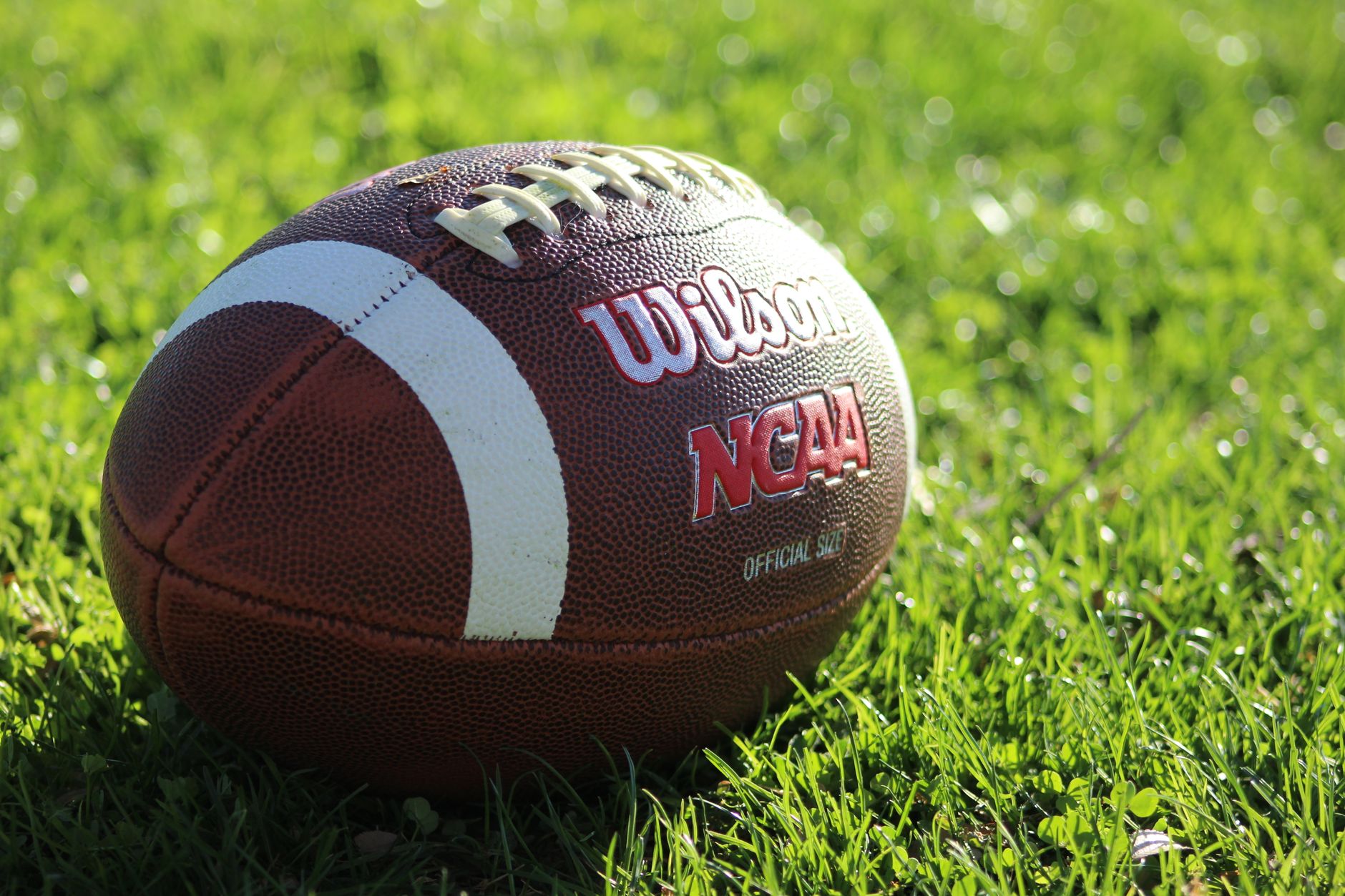
Photo by Jack Biddinger on Pexels
What about neutral sites, international games, and the edge case?
Neutral-site and international college football games can distort ordinary home-field assumptions because neither team receives its usual stadium environment, travel routine, or campus crowd advantage. The 2026 schedule example includes North Carolina versus TCU at Aviva Stadium in Dublin, Ireland, listed for August 30, making travel, time-zone adjustment, and venue familiarity relevant analytical factors.
That Dublin matchup is a good reminder not to reduce a prediction to the point spread. ESPN’s listed market example gives TCU a -6.5 line with a 49.5 over-under, but a displayed number is not proof of value, accuracy, or permanence. Lines can move after injuries, weather updates, sharp money, quarterback news, or a change in sportsbook pricing. If you are betting, record the source and timestamp; otherwise, you may later compare an old number with a new result and fool yourself.
Other 2026 examples show how varied a single weekend can be. San José State is listed at USC in Los Angeles, while NC State is listed at Virginia in Charlottesville and Jacksonville State at North Dakota State in Fargo. Those games carry different travel distances, stadium conditions, program expectations, and matchup histories, even though they appear in the same schedule table.
A practical edge case is kickoff conversion. A game displayed as 12:00 a.m. in a schedule may reflect the publisher’s time-zone presentation rather than the local kickoff that a fan expects. Before placing a bet or arranging travel:
- Confirm the venue’s local time.
- Check the official broadcaster.
- Recheck the matchup on game day.
- Compare the current line with the opening number.
- Review weather and confirmed inactive players.
Get the latest details before the Saturday slate fills up.
Where does college football fail?
College football coverage fails when it treats schedules, rankings, odds, and headlines as permanent facts rather than time-sensitive information. ESPN, NCAA.com, conference websites, broadcasters, and team channels may publish related details at different moments, while injuries, weather, transfers, coaching changes, and television decisions can alter the practical meaning of a matchup.
There is also a measurement problem. A team’s record does not reveal whether it faced strong opponents, played several road games, lost its starting quarterback, or built its wins against lower-division competition. Basic statistics such as points per game and total yards can mislead when pace, field position, turnover luck, and opponent quality are ignored. Better analysis combines efficiency, success rate, explosive plays, red-zone results, sack rate, special teams, and the availability of key players.
The College Football Playoff adds another layer. CFP selection is not simply a reward for the team with the most wins; conference performance, opponent quality, head-to-head results, and other selection considerations matter. The NCAA’s FBS coverage has also highlighted national championship results, Heisman Trophy contenders, returning players, and early top-25 projections, but early projections are forecasts, not final rankings.
If you are comparing betting markets, the most useful operational habit is to separate information from interpretation:
- Information: venue, kickoff, broadcast, injuries, weather, and current odds.
- Interpretation: expected pace, matchup advantage, upset probability, or total points.
- Decision: whether the price justifies the risk.
- Review: what changed between your original assessment and the final result.
For a deeper statistical route, see this advanced college football matchup analysis. The point is not to sound clever; it is to avoid paying for confidence that the evidence does not support.

Photo by AlphaTradeZone on Pexels
Should you try college football today?
Yes, college football is worth following today if you want a sport with dense regional identity, major conference battles, weekly schedule variety, and a postseason that builds toward the CFP. Start with one conference, learn its teams and travel patterns, then expand to FBS rankings, FCS results, bowl projections, and national championship discussion instead of attempting to understand every program at once.
A sensible viewing routine is simple. First, open an official schedule and note the venue, local kickoff, network, and current status. Second, read the latest team news and compare the expected starters. Third, examine opponent quality rather than relying only on win-loss records. Fourth, watch the first quarter for tempo, protection, defensive spacing, and field-position patterns before making a strong judgment.
For 2026, the schedule’s international opening example, the broad conference listings, the Week 1 window, and the January 25, 2027 championship date provide useful anchors. They also show why college football is not one uniform product: North Carolina–TCU in Dublin feels different from San José State–USC at the Los Angeles Memorial Coliseum, and both differ again from an FCS game at the Fargodome.
My recommendation is to keep a small game log with date, venue, line, injuries, weather, and final result. After ten or fifteen games, you will see whether your assumptions were actually useful or merely sounded good in the warm noise of Saturday afternoon. If money is involved, use legal, age-appropriate services in your jurisdiction, set a fixed budget, and never chase losses. That is not thrilling advice, but it is the advice that saves hassle. Believe it or not — I do.
Ready to follow the 2026 slate with a cleaner process?
Key College Football Takeaways
- FBS, FCS, Division II, and Division III are distinct competitive levels.
- ESPN’s 2026 schedule lists Week 1 from August 22 to September 7.
- The 2026 CFP National Championship is scheduled for January 25, 2027, at Allegiant Stadium.
- North Carolina versus TCU is listed at Aviva Stadium in Dublin, Ireland.
- San José State versus USC is listed at the Los Angeles Memorial Coliseum.
- Venue, time zone, travel, weather, injuries, and line movement can materially affect analysis.
- NCAA.com and official conference or university sources should be checked alongside ESPN.
- A prediction is not automatically a good bet; price and risk remain separate questions.
For a compact reference, visit our college football rankings and scores guide.
Frequently Asked Questions
Q: What is college football?
A: College football is American gridiron football played by university teams, primarily through NCAA competition in the United States. Its main divisions include FBS and FCS at Division I, plus Division II and Division III programs. The sport combines regular-season games, conference races, bowl opportunities, and the College Football Playoff at the highest level. Teams may represent universities such as USC, TCU, North Carolina, Virginia, and North Dakota State, but they compete within different conferences and divisions. Always confirm a program’s level before comparing rankings, statistics, or postseason prospects.
Q: When does the 2026 college football season start?
A: The published ESPN 2026 schedule places Week 1 between August 22 and September 7, 2026. The opening window can contain games on different dates, at different venues, and across multiple time zones. Some matchups may be played internationally, including the listed North Carolina–TCU game at Aviva Stadium in Dublin. Check the official team, conference, broadcaster, and ESPN listings close to kickoff because times and television assignments can change.
Q: What is the difference between FBS and FCS college football?
A: FBS and FCS are separate Division I college football levels with different competition and postseason structures. FBS programs generally receive the greatest national exposure and compete for CFP access, while FCS teams use a playoff-oriented postseason format. The FCS includes conferences such as the Big Sky, Ivy League, Missouri Valley Football Conference, Patriot League, Southern, Southland, SWAC, and others. A strong FCS record does not automatically translate into an equivalent FBS ranking, so compare opponent quality and division context.
Q: How should I analyze a college football matchup?
A: Begin with the official venue, kickoff time, injuries, weather, and current odds, then evaluate team efficiency and opponent quality. Review quarterback availability, offensive line protection, explosive-play rate, red-zone performance, turnover margin, special teams, and recent travel. For an international game such as North Carolina versus TCU in Dublin, add time-zone adjustment and neutral-site conditions. Write down your expectations before kickoff and compare them with the result afterward; this helps identify whether your method works or merely benefited from luck.
Q: Is college football betting free?
A: Watching college football coverage is often free through news sites, official score pages, and some television or streaming services, but betting requires an account, funds, and legal availability in your jurisdiction. ESPN may display lines such as TCU -6.5 and a 49.5 total, yet those numbers can change and are not guarantees. Check age, licensing, deposit, withdrawal, and responsible-gambling requirements before using any operator. Never treat a free prediction article as proof that a wager has positive value.
Q: Why do college football schedules sometimes show confusing times?
A: Schedule pages may display times according to a selected time zone, publisher setting, or automated data feed, which can make late-night listings look unusual. An international matchup at Aviva Stadium in Dublin may be especially confusing for viewers in the United States. Confirm the venue’s local time, your own time zone, the broadcaster, and the university’s official page. Rechecking on game day is worthwhile because television windows and kickoff times can be revised.
Q: What is the College Football Playoff?
A: The College Football Playoff is the postseason competition that determines the FBS national champion. Teams reach the CFP through a selection process that considers records, conference performance, opponent quality, head-to-head outcomes, and broader résumé factors rather than one statistic alone. NCAA.com lists championship news and historical information, while the official CFP website provides postseason details. For the 2026 season, the national championship is scheduled for January 25, 2027, at Allegiant Stadium in Las Vegas.
College football is a long road of small clues: a quarterback’s hurried feet, a tired secondary late in the fourth quarter, an empty seat in a rainy stadium, and a schedule line that quietly changed overnight. Keep the sources straight, keep the numbers dated, and let the games earn your certainty. Believe it or not — I do.
Want to keep the research routine simple?
Thank you for reading.
Pitch Notes · The Ledger