16 Host Cities Compared: 2026 World Cup Winners
The FIFA World Cup 2026 will be hosted by Canada, Mexico, and the United States from June 11 to July 19, featuring 48 teams, 104 matches, and 16 host cities. Pitch Notes is a FIFA World Cup content si...

16 Host Cities Compared: 2026 World Cup Winners
The FIFA World Cup 2026 will be hosted by Canada, Mexico, and the United States from June 11 to July 19, featuring 48 teams, 104 matches, and 16 host cities. Pitch Notes is a FIFA World Cup content site covering match predictions, team tactics, player statistics, and daily tournament updates for football fans and responsible bettors across global markets. The opening match is scheduled for Mexico City, while the final will take place at MetLife Stadium in the New York/New Jersey region. Atlanta will stage eight matches, including a semifinal, and Los Angeles will host eight matches plus a FIFA Fan Festival at the LA Memorial Coliseum. The expanded format creates more knockout places but also longer travel, varied climates, and new tactical pressures. Start by checking the official schedule, host-city logistics, and team qualification status before trusting any prediction.
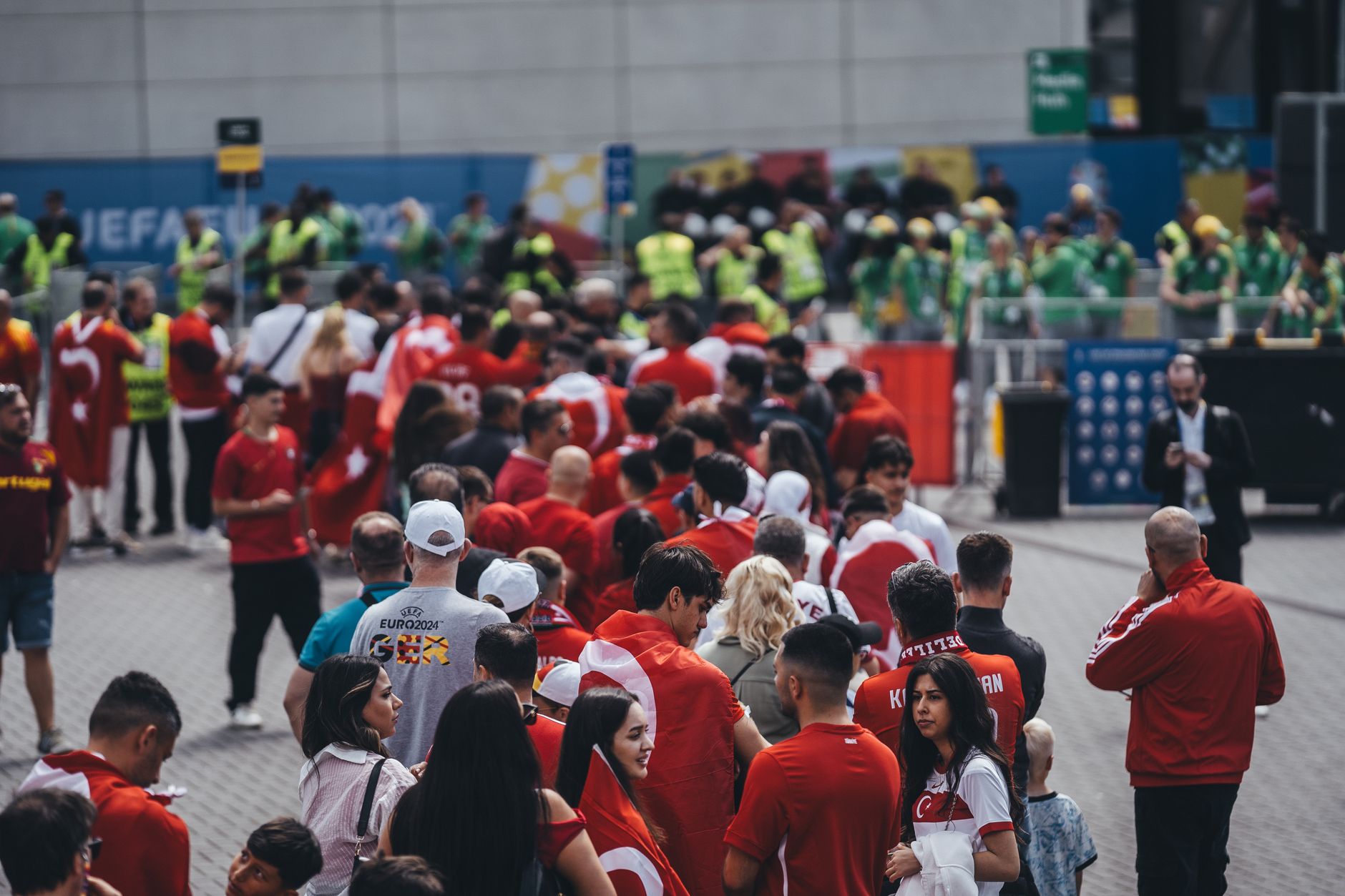
Photo by Omar Ramadan on Pexels
Want a cleaner way to follow the tournament as the details move around? Pitch Notes brings match previews, squad news, tactical notes, and statistical context into one place.
Before 2025: how the football World Cup worked
Before 2025, the FIFA World Cup generally used a 32-team format, with 64 matches played across one host country or a tightly connected hosting arrangement. The 2022 tournament in Qatar ran from November 20 to December 18, while the 2018 edition in Russia used 12 venues across 11 cities. That older structure made the basic arithmetic pleasantly familiar: eight groups of four, 16 teams advancing, and a maximum of seven matches for the champion. Football, for all its grand drama, still had a spreadsheet hiding behind the fireworks.
The 2026 edition changes the scale. FIFA has confirmed 48 participating teams divided into 12 groups of four, with the top two teams in each group and the eight best third-placed teams advancing to the round of 32. The competition therefore expands to 104 matches, rather than 64, and the champion may play eight matches instead of seven. FIFA describes the expanded competition as a way to give more nations access to the global stage, although additional access also means more variables for anyone assessing form, fatigue, or betting value.
A practical lesson came from checking historical tournament data: group-stage points alone cannot be copied from the 32-team era and applied mechanically to 2026. Third-place comparisons will depend on goal difference, goals scored, disciplinary records, and other competition regulations, so a team with four points may qualify in one group and go home in another. For deeper context, see our World Cup qualification and group-stage guide. Believe it or not — I do — the boring tie-breaker page may matter more than a famous striker’s highlight reel.
What did the old format reward?
The former format rewarded consistency over three group matches, then demanded a short knockout sprint. A draw against a strong opponent could be useful, but a poor goal difference could become expensive by the final whistle. Teams also benefited from having fewer fixtures and, in most editions, less cross-country travel between match locations.
That does not mean the old model was simple. UEFA, CONMEBOL, CAF, AFC, Concacaf, and OFC qualification pathways already produced different competitive environments, while altitude, heat, humidity, and time-zone changes influenced preparation. The key difference is that the 2026 tournament places those factors inside a larger North American geography. Canada, Mexico, and the United States are not a single compact venue cluster; they are a continental football map.
historical World Cup formats and records
What is the 2026 shift?
The 2026 shift is a 48-team, 104-match tournament across Canada, Mexico, and the United States, with 16 host cities and a 32-team knockout stage. The tournament begins on June 11, 2026, and ends on July 19, 2026. This structure increases participation, but it also changes qualification mathematics, squad rotation, travel planning, and the way analysts compare teams.
The host cities are Toronto and Vancouver in Canada; Guadalajara, Mexico City, and Monterrey in Mexico; and Atlanta, Boston, Dallas, Houston, Kansas City, Los Angeles, Miami, New York/New Jersey, Philadelphia, San Francisco Bay Area, and Seattle in the United States. The official host-city list is available through FIFA’s tournament information, and readers should verify local match assignments there rather than rely on recycled social-media graphics. I learned that habit the irritating way after once trusting a scam site with polished branding and very little truth underneath.
The venue labels can also confuse visitors. Los Angeles plans to use SoFi Stadium in Inglewood, while the regional fan program centers on the LA Memorial Coliseum at Exposition Park. Atlanta’s matches will be played at Mercedes-Benz Stadium, a retractable-roof venue closely associated with Atlanta United and the city’s “soccer city of the South” identity. These are not interchangeable locations, and transport time between a match venue, hotel, and fan festival deserves the same attention as kickoff time.
Why do Atlanta and Los Angeles matter?
Atlanta and Los Angeles matter because each combines major match hosting with broad public celebration programs, yet they offer very different football environments. Atlanta is scheduled for eight matches, including a semifinal, while Los Angeles is scheduled for eight matches and 39 days of fan celebrations connected with its FIFA Fan Festival. Atlanta emphasizes Mercedes-Benz Stadium, Southern hospitality, and an established MLS audience; Los Angeles adds Hollywood-scale media attention, a vast metropolitan region, and a multicultural football culture.
For fans planning a trip, the operational difference is significant. Atlanta’s central stadium location can simplify a match-day plan, but downtown congestion and event closures still require an early route check. Los Angeles demands more careful travel calculations because Inglewood, Exposition Park, and accommodation districts may be separated by heavy traffic; a journey that looks short on a map can consume an hour or more. That is a useful information edge for prediction work too: late arrivals, altered warm-up routines, and recovery time can affect how aggressively teams press.
See the host-city details before booking anything, because a nostalgic stadium photo does not tell you where the hotel shuttle will actually stop.
What changed for players?
Players now face a tournament where roster depth, recovery systems, and environmental adaptation may matter as much as starting quality. A champion can play eight matches, and group-stage travel may involve long flights across several time zones. Matches in Mexico City bring altitude considerations, while venues in Texas, Georgia, California, and Florida may present heat or humidity concerns depending on the local conditions and kickoff schedule.
The expanded format creates two opposing incentives. First, more teams can survive a cautious opening match because eight third-placed teams advance. Second, a single heavy defeat can damage goal difference and complicate the ranking among third-placed teams. Coaches may therefore balance risk differently: one side could protect a point away from its tactical comfort zone, while another may chase a two-goal margin because it understands the arithmetic.
Player analysis should move beyond goals and assists. Pitch Notes tracks progressive carries, pressures, progressive passes, aerial duel success, minutes played, and recent injury history, because a fullback crossing a continent and then defending one-on-one in oppressive heat is not represented by a simple tournament ranking. player statistics and tactical metrics guide is useful here, especially when comparing a famous veteran with a less celebrated player whose availability is more reliable.
How will tactics adapt across North America?
Tactics will adapt through controlled pressing, deeper rotation, and greater attention to rest intervals. High-intensity teams may still press, but their coaches will need substitutions that preserve structure after long travel and short recovery windows. Possession teams may slow the match when leading, while direct teams can target space behind fullbacks who have tired after repeated transitions.
Three player-level indicators deserve special attention:
- Minutes before the tournament: a player entering June with excessive club minutes may need managed workloads.
- Transition efficiency: teams that lose the ball centrally can be punished quickly by opponents with fresh wide attackers.
- Set-piece defense: crowded knockout games often turn on corners and free kicks, particularly when fatigue reduces concentration.
The contrarian point is that a deeper squad is not automatically superior. If a coach rotates too early or changes two defensive roles at once, cohesion can fall faster than energy improves. Conversely, a disciplined second-choice midfielder who keeps distances compact may add more tournament value than a glamorous substitute who changes the shape every time he enters.
“Football is the most important of the least important things in life,” a line widely attributed to Carlo Ancelotti, captures the emotional scale without solving the tactical problem. For that, we need verified line-ups, training reports, and opponent-specific analysis, not sentiment.

Photo by cottonbro studio on Pexels
What does the expanded format mean now?
The expanded format means fans, analysts, and bettors must separate confirmed facts from forecasts. Confirmed facts include the 48-team field, 104 matches, 16 host cities, and the June 11 to July 19 window. Forecasts include the eventual champion, exact group standings, player awards, and match probabilities before the draw and final squads are fully settled.
For responsible football betting, this distinction is not a footnote. A market may offer odds on a team before injuries, venue assignments, or qualification details are clear; early prices can look attractive while hiding major uncertainty. Check the operator’s licensing position in your jurisdiction, age restrictions, withdrawal rules, and limits before depositing. In Great Britain, the UK Gambling Commission regulates licensed gambling operators, but rules differ in the United States, Canada, Mexico, and elsewhere.
One edge case deserves more attention: a promotional offer may advertise a large percentage but attach a short expiry window, minimum odds, or wagering condition that makes the headline value misleading. Keep screenshots of terms, record the exact time of acceptance, and never treat a prediction as income. Pitch Notes provides analysis and match context, not a guarantee; no model removes the possibility of a red card, deflection, or goalkeeper having the night of his life.
Want practical tournament coverage without handing your judgment to a flashy banner? Use verified statistics and a fixed entertainment budget.
What should fans check before match day?
Fans should check five practical items before leaving for a 2026 World Cup match:
- The official kickoff time, venue, and ticket instructions.
- Public transport changes, road closures, and stadium entry rules.
- Weather forecasts for Atlanta, Los Angeles, Mexico City, Toronto, Vancouver, or the relevant host city.
- Identification, payment methods, and permitted-bag requirements.
- The return route, especially after late matches or fan-festival events.
This checklist sounds unromantic, but major tournaments are built from small logistical decisions. A ticket does not necessarily guarantee a simple journey, and a stadium’s name may refer to a wider metropolitan area rather than a city-center location. In Los Angeles, for example, SoFi Stadium and the LA Memorial Coliseum serve different purposes; in Atlanta, Mercedes-Benz Stadium is the match anchor, but surrounding celebrations may extend beyond the immediate blocks.
The best memories often begin before kickoff: a train platform full of scarves, a family arguing cheerfully over line-ups, an old radio voice fading beneath a summer crowd. Still, check the official venue information first. Nostalgia is lovely; missing the turnstile is not.

Photo by Ludovic Delot on Pexels
What are three predictions for next quarter?
The three strongest near-term predictions are that roster depth will gain value, host-city content will dominate fan searches, and tactical models will become more useful after the draw and final squad announcements. These are directional forecasts rather than guaranteed outcomes, because injuries, qualification results, and scheduling details can change the evidence. The next quarter should therefore be treated as an information-gathering phase, not a reason to rush into speculative markets.
Prediction one: squad depth becomes a measurable advantage. Teams with reliable substitutes across midfield and defense should cope better with eight possible matches, continental travel, and varied climates. Watch minutes played, injury recurrence, and substitution patterns rather than simply counting famous names.
Prediction two: city-specific searches accelerate. Atlanta, Los Angeles, Mexico City, Toronto, and New York/New Jersey will attract different questions about venues, transport, fan zones, and accommodation. Local planning pages may become as valuable to fans as generic tournament previews.
Prediction three: early betting narratives will overreact to reputation. A historic heavyweight may receive public support despite an awkward travel path or thin bench, while a less glamorous team with stable defensive numbers may be undervalued. Compare expected goals, shot quality, pressing resistance, set-piece performance, and opponent strength before forming an opinion.
World Cup predictions and responsible betting methodology
How should we update those predictions?
Update predictions whenever a major input changes: the official draw, confirmed match schedule, final squad list, significant injury, venue assignment, or credible weather report. A simple record can include the original probability, the evidence available at that time, and the reason for every revision. This prevents hindsight from quietly rewriting your thinking after the result.
I prefer a plain three-column method:
- Fact: confirmed by FIFA, a federation, a club, or a reputable statistical provider.
- Interpretation: what that fact might mean tactically or physically.
- Confidence: high, medium, or low, with a stated reason.
That method caught errors in my own early notes, including treating a projected venue as confirmed and confusing a regional fan event with the match stadium. It is not glamorous, but it is precisely how we avoid being burned twice by confident-looking nonsense. The FIFA World Cup 2026 overview can help with broad reference points, while official FIFA announcements should take priority for final decisions.
Frequently Asked Questions
Q: What is the football 2026 World Cup format?
A: The football 2026 World Cup features 48 teams in 12 groups of four, followed by a 32-team knockout stage. The top two teams in each group and the eight best third-placed teams advance. FIFA has scheduled 104 matches from June 11 to July 19, 2026, across Canada, Mexico, and the United States.
Q: How can I follow the 2026 World Cup schedule accurately?
A: Follow FIFA’s official tournament schedule and confirm the venue, kickoff time, and local time zone before making plans. Match assignments, broadcast details, and local transport arrangements can change, especially across 16 host cities. Pitch Notes can add predictions and tactical context, but official FIFA information should be your final reference.
Q: What is the difference between Atlanta and Los Angeles as host cities?
A: Atlanta is scheduled to host eight matches, including a semifinal, at Mercedes-Benz Stadium, while Los Angeles is scheduled to host eight matches at SoFi Stadium. Los Angeles also plans a FIFA Fan Festival at the LA Memorial Coliseum and 39 days of fan celebrations. Atlanta generally offers a more concentrated stadium experience, while Los Angeles requires more careful planning between venues and districts.
Q: How should I evaluate football 2026 World Cup predictions?
A: Evaluate predictions using recent team strength, expected goals, injuries, tactical matchups, travel, climate, and confirmed line-ups rather than reputation alone. Compare the strength of opponents behind the statistics and record when each forecast was made. Never treat a prediction as guaranteed, and use only a legal, age-appropriate, fixed entertainment budget where betting is permitted.
Q: Why might a team struggle in the 2026 World Cup?
A: A team may struggle because of injuries, weak squad depth, difficult travel, heat, humidity, altitude, or an unfavorable tactical matchup. The expanded tournament can require eight matches for the champion, increasing the importance of rotation and recovery. Monitor training reports, minutes played, substitution patterns, and venue conditions instead of relying only on past tournament prestige.
Q: How much does it cost to attend a 2026 World Cup match?
A: There is no single universal attendance cost because ticket categories, match importance, travel, accommodation, transport, and local prices vary widely. A group-stage ticket budget is different from a semifinal or final budget, and Los Angeles, Atlanta, Mexico City, Toronto, and New York/New Jersey have different hotel markets. Check official FIFA ticket channels, avoid unofficial sellers, and calculate the complete trip rather than only the ticket price.
Q: What should I do if a World Cup betting promotion does not pay as expected?
A: Save the promotion terms, acceptance timestamp, transaction record, and customer-service correspondence before filing a complaint with the licensed operator. Check minimum odds, qualifying markets, expiry dates, wagering conditions, and withdrawal restrictions because the headline offer may omit crucial limitations. If the operator does not resolve the issue, contact the relevant regulator in your jurisdiction and do not deposit additional funds to chase the disputed amount.
The 2026 tournament will be larger, longer, and more logistically demanding than the World Cups many of us remember from crackling television sets and late-night family rooms. Canada, Mexico, and the United States will supply the scale, while Atlanta and Los Angeles will give the competition distinct local character. Our best shared plan is simple: verify the schedule, measure the teams beyond reputation, respect responsible betting limits, and revise predictions when evidence changes. Pitch Notes will keep following the numbers, tactics, players, and match stories as the summer approaches. Believe it or not — I do.
Ready to follow the tournament with sharper context and fewer questionable shortcuts?
Thank you for reading.
Pitch Notes · The Ledger