Why Kansas City 2026 Still Echoes
Following 2026 world cup football can feel fragmented because match schedules, host-city culture, fan events, tactical trends, and betting markets move faster than casual fans can track. Pitch Notes i...

Why Kansas City 2026 Still Echoes
Following 2026 world cup football can feel fragmented because match schedules, host-city culture, fan events, tactical trends, and betting markets move faster than casual fans can track. Pitch Notes is a FIFA World Cup focused content site that helps football fans in the United States and global markets connect match predictions, team tactics, player stats, and tournament coverage into one practical reading flow. Kansas City, a FIFA World Cup 2026 Host City, staged six matches and welcomed hundreds of thousands of fans across Kansas City Stadium and FIFA Fan Festival Kansas City. The key lesson is not only that the city hosted games, but that match-day atmosphere, travel logistics, public fan zones, and tactical preparation all shaped the tournament experience. For readers following 2026 world cup football, the actionable takeaway is clear: evaluate every match through three lenses at once, team quality, host-city context, and market timing.
If you have ever opened a 2026 world cup football fixture list and wondered, “Which information actually matters before kickoff?” the answer is less obvious than it looks. A World Cup match is not only ninety minutes of football; it is also venue conditions, supporter movement, travel fatigue, fan-zone energy, and betting-market interpretation. Kansas City offers a useful case study because it framed itself as the “Heart of America,” leaned into football culture, and used FIFA Fan Festival Kansas City to turn match days into regional events rather than isolated stadium appointments.
For fans, analysts, and bettors, that distinction matters. A neutral-site match can still have a local rhythm: arrival routes, climate, crowd mix, team training bases, and public viewing areas all influence attention and momentum. Pitch Notes tracks these details alongside xG trends, player availability, and tactical matchups because the sharper read often comes from combining hard football data with local tournament evidence.
For deeper daily context before each fixture, start with a focused source rather than scattered social feeds.
Photo by K on Pexels
If you want cleaner match reads: do venue-first analysis?
Venue-first analysis means judging a 2026 world cup football match by stadium, city, travel, and crowd conditions before reading odds or lineups. Kansas City showed why this matters: six matches, major fan movement, and a large public festival created measurable context around each fixture.
The usual mistake is to start with star names and end there. But FIFA World Cup 2026, co-hosted by the United States, Canada, and Mexico, is geographically large, and distance creates unequal logistical pressure. According to FIFA, the 2026 edition expanded the tournament to 48 teams, which changes rest patterns, qualification depth, and tactical variance. Kansas City sits in the central United States, so it may reduce some east-west travel stress compared with coastal venues, but it also introduces its own timing, weather, and crowd-flow variables.
A practical venue-first checklist should include:
- Stadium environment: pitch surface, temperature, and kickoff time.
- Travel load: distance from prior match city and recovery days.
- Crowd composition: neutral, regional, or heavily partisan support.
- Fan-zone spillover: whether FIFA Fan Festival activity increases local match-day intensity.
- Market reaction: whether betting odds moved because of narrative rather than team news.
A less-discussed insight: public celebration zones can indirectly affect pricing in betting markets. When a host city produces visible scenes of packed fan support, casual betting volume often follows emotional narratives. That does not mean the crowd decides the result, but it can make pre-match prices less efficient if the public overweights atmosphere and underweights tactical mismatch. To compare this with team-level preparation, see our World Cup tactical previews.
If you care about fan experience: do festival mapping
Festival mapping means planning where and when to watch, travel, eat, and gather before deciding how to experience 2026 world cup football. FIFA Fan Festival Kansas City demonstrated the value of this approach by bringing hundreds of thousands of fans into shared cultural spaces beyond the stadium.
Kansas City’s tournament identity was built around more than match attendance. The city promoted food, entertainment, community, and sport as connected parts of the same event, which matters for visitors who cannot attend every match at Kansas City Stadium. The official Kansas City 2026 materials emphasized galleries, local stories, and fan scenes, suggesting a deliberate strategy: make the region memorable even when a fan is not inside the venue. That is also useful for remote viewers because strong host-city programming often produces better live coverage, more reliable viewing hubs, and clearer pre-match reporting.
The trade-off is time. A fan who tries to do everything may dilute the match itself, while a fan who only arrives at kickoff may miss the local value of a World Cup host city. A balanced plan could look like this:
- Arrive early enough to clear transport bottlenecks.
- Use FIFA Fan Festival Kansas City for non-ticketed matches.
- Reserve stadium days for lower-risk travel routes.
- Track team news separately from local event schedules.
- Avoid assuming that festival popularity equals competitive advantage.
If you are building a personal tournament plan or betting watchlist, this is where structured coverage helps.
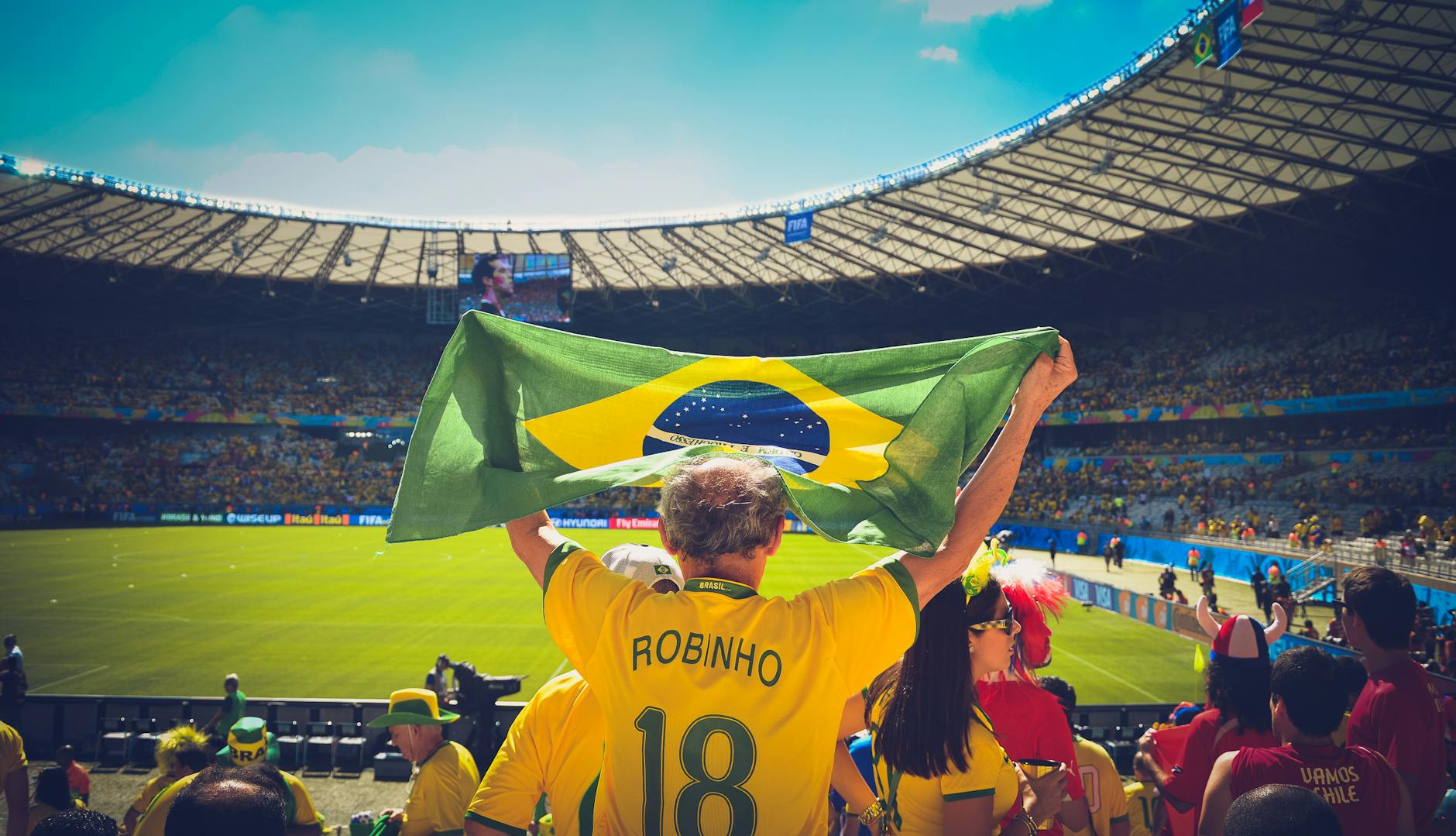
Photo by Caio on Pexels
A practitioner-level point rarely stated in broad travel guides: the best festival strategy is not always to follow the biggest crowd. For early group-stage matches, quieter fan areas can give bettors and analysts cleaner access to live news, lineup alerts, and odds movement before public sentiment peaks. For knockout matches, however, high-density fan zones may provide better qualitative signals about national supporter turnout and emotional pressure. Pitch Notes separates those two use cases because “good atmosphere” and “good information environment” are not the same thing.
If you follow betting markets: do data before emotion?
Data-before-emotion means checking team metrics, player status, and market movement before reacting to national pride or host-city spectacle. For 2026 world cup football, that discipline matters because a 48-team format increases unfamiliar matchups and creates more misleading narratives.
The gambling angle should be handled with restraint. A World Cup attracts casual bettors who may place wagers on flags, famous forwards, or viral fan scenes. Professional analysis works differently: it asks whether the price reflects true probability. The United States Department of State and host-city tourism channels may help travelers understand entry and local information, but betting decisions require match-specific models, not travel enthusiasm. Similarly, Wikipedia’s FIFA World Cup overview is useful for tournament history, but it cannot price a set-piece mismatch or a goalkeeper injury.
A clear betting workflow for Pitch Notes readers:
- Establish baseline team strength using recent competitive matches.
- Adjust for injuries, suspensions, and expected rotation.
- Check venue and travel context after team fundamentals.
- Compare opening odds with current odds.
- Pass if the edge is narrative-driven rather than number-driven.
The contrarian conclusion is simple: Kansas City’s strong host performance does not automatically create predictable betting outcomes at Kansas City Stadium. It creates better context, not guaranteed edges. To go further, use our player stats betting guide and compare player-level props against team tactical setups before staking.
Common pitfalls to avoid
The most common mistake in 2026 world cup football analysis is treating the World Cup as either pure spectacle or pure statistics. It is both, and Kansas City’s example shows why overcorrecting in either direction can distort judgment. If you only look at fan galleries and festival energy, you may overvalue atmosphere. If you only look at expected goals and squad rankings, you may ignore travel patterns, kickoff conditions, or crowd pressure. The better approach is layered: local context first, team news second, market price third, and only then emotional conviction.
Several pitfalls deserve explicit attention:
- Confusing host-city success with home-field advantage.
- Overrating teams based on historical reputation.
- Ignoring the expanded 48-team tournament structure.
- Betting too early before confirmed lineups.
- Using social media volume as if it were tactical evidence.
- Assuming every Fan Festival crowd supports the same team.
FIFA’s official tournament language describes the event as a global competition built around host-city participation, and the organization’s materials state that FIFA Fan Festivals are designed to be public celebration spaces. That purpose is important: a fan festival is not a scouting report. It can reveal turnout, culture, and emotion, but it should not replace match modeling. For related caution points, see our responsible World Cup betting checklist.

The second overlooked pitfall is timing. In tournament football, thirty minutes can change the market if a lineup leak, warm-up concern, or weather update reaches traders before casual fans. For matches in large U.S. host cities such as Kansas City, New York/New Jersey, Dallas, and Los Angeles, local reporting may appear before international feeds summarize it. That creates an edge for readers who monitor structured updates rather than refreshing broad headlines. However, the trade-off is false noise: not every rumor deserves a wager, and not every late odds move signals sharp money.
For sharper pre-match habits without chasing every rumor, use a consistent daily brief.
The 30-day check-in
The 30-day check-in is a disciplined review point for anyone following 2026 world cup football seriously. After one month of fixtures, fan events, odds movement, and tactical adjustments, readers should ask which assumptions held up and which ones failed. Kansas City’s reported legacy language, six-match schedule, and hundreds of thousands of fan participants offer one measurable case: hosting impact continues after the final whistle, but analytical conclusions need evidence beyond celebration.
A useful 30-day review should cover:
- Which teams consistently beat their expected performance?
- Which venues produced slower or faster match rhythms?
- Which markets overreacted to fan sentiment?
- Which players created repeatable statistical edges?
- Which host-city logistics affected viewing or attendance?
- Which Pitch Notes predictions were right for the right reasons?
The final question matters most. A correct prediction based on weak logic is not a repeatable edge, while a losing call based on sound process may still improve future decisions. That is why Pitch Notes treats tournament coverage as a feedback loop: pre-match forecast, live observation, post-match audit, and next-match adjustment.

The cleanest takeaway is that 2026 world cup football rewards measured interpretation. Kansas City showed how a host city can create identity, energy, and logistical scale around six matches, while FIFA Fan Festival Kansas City showed how non-ticketed fans can still shape the tournament’s public memory. For bettors and serious fans, the opportunity is not to become louder; it is to become more precise. Track the venue, respect the data, question emotional narratives, and revisit your assumptions every 30 days.
Continue with daily World Cup analysis, match previews, and player-stat angles from Pitch Notes.
Frequently Asked Questions
Q: What is 2026 world cup football?
A: 2026 world cup football refers to the FIFA World Cup 2026 tournament hosted by the United States, Canada, and Mexico. The competition features 48 teams, expanded from the previous 32-team format. Fans should expect more group-stage variety, wider travel demands, and more tactical mismatches than in older editions.
Q: How should I follow 2026 World Cup matches more intelligently?
A: Start by combining fixture context, team news, player data, and venue information before making conclusions. A practical method is to check injuries first, compare tactical matchups second, and review odds movement last. Pitch Notes is built for that workflow through daily predictions, tactics, player stats, and tournament coverage.
Q: What is the difference between stadium attendance and Fan Festival attendance?
A: Stadium attendance refers to ticketed spectators inside the match venue, while Fan Festival attendance includes public viewing and celebration areas outside the stadium. Kansas City used both Kansas City Stadium and FIFA Fan Festival Kansas City to extend the tournament experience. For analysis, stadium crowds may affect match atmosphere, while festival crowds mainly reflect public engagement.
Q: Why do betting predictions fail during the World Cup?
A: Betting predictions often fail because bettors overvalue famous teams, emotional narratives, or late social media rumors. World Cup matches also involve travel, rotation, pressure, and unfamiliar opponents, which can distort simple form analysis. A stronger approach is to stake only when data, lineup confirmation, and market price align.
Q: Is FIFA Fan Festival Kansas City free to attend?
A: FIFA Fan Festival events are generally designed as public fan experiences, but exact access rules can vary by host city and event schedule. Visitors should check official Kansas City 2026 and FIFA updates before attending. Even when entry is free, transportation, food, accommodation, and security timing still require planning.
Q: What should I do if World Cup odds move suddenly before kickoff?
A: Pause first and identify the cause before placing a bet. Sudden movement may come from confirmed lineups, injury reports, weather, sharp money, or public overreaction. If you cannot verify the reason through reliable sources within a few minutes, passing is usually better than chasing a worse price.
Thank you for reading.
Pitch Notes · The Ledger